Last updated: August 22, 2026
Every sewing group has the same thread running through it. Somebody asks whether they should get a serger, twenty people say yes, and nobody asks what the person actually sews. If you make quilts and curtains, a serger will sit under a dust cover. If you make leggings and t-shirts, you have probably already been fighting your machine for a year without naming the problem.
This is the honest version of the question. Five things happen to people who have genuinely outgrown a single machine, and if two or three of them describe your last few projects, the answer is yes. If none of them do, spend the money on needles, thread and a better light instead.
This article contains affiliate links. If you buy through them, we may earn a commission at no extra cost to you. Learn more.
Quick Answer
Do you need a serger?
- Yes, if you sew knits regularly. That is the one job where the difference is not cosmetic.
- Yes, if you make garments that get washed weekly and your zigzagged seam allowances are fraying anyway.
- Probably not, if you quilt, sew home decor, or mostly mend. A pinked or zigzagged edge is fine there.
- Not yet, if your current machine still has features you have never used. Learn the stretch stitch and the overcast foot first.
Bottom line: a serger solves seam finishing and knit seams. If neither of those is your bottleneck, it is a nice machine solving a problem you do not have.
Sign One: You Sew Knits and You Are Losing
Knit fabric is the clearest case. A straight stitch has no give, so the thread snaps the first time the seam is stretched over a shoulder or a hip. You can work around it with a ballpoint needle and a narrow zigzag, and plenty of people do, but the seam is bulkier, slower to sew and never quite flat.
A serger sews a seam that stretches because the looper threads travel diagonally across the edge. That is the structural difference, not a finish difference. If your last three projects were t-shirts, leggings or anything with jersey in it, this alone answers the question.
The Wavy Neckline Test
Sew a length of jersey on your regular machine and look at it. If the seam comes out rippled, that is the presser foot stretching the fabric as it feeds. Differential feed on a serger is the direct fix, and it is a dial rather than a technique. Nothing on a standard machine does the same job.
Sign Two: Your Seam Allowances Fray Anyway
Pinking shears slow fraying down. A zigzag over the raw edge slows it down more. Neither survives thirty washes on a woven cotton shirt worn every week, and by the time you notice, the fraying has eaten into the stitch line.
An overlock edge is not a slowed down fray, it is a wrapped edge with nothing left to unravel. If you have started avoiding certain fabrics because you know what the inside will look like in a year, you are already paying for a serger in projects you are not making.
Sign Three: The Inside Bothers You
This is a taste question and it is a legitimate one. Turn a store bought shirt inside out and the seams are serged, narrow and flat. Turn a home sewn one inside out and you often see wide allowances, a zigzag that missed the edge in two places, and threads.
If you make things for other people, or you sell at a market, or you simply want the garment to feel bought rather than made, the inside is a large part of that impression. It is not the only route. French seams and bias bound edges look better than serging does, they just take much longer.
Sign Four: Finishing Takes Longer Than Sewing
Time is the argument people underrate. On a woven garment with eight seams, finishing each allowance separately on a regular machine is a second full pass over everything you already sewed. On a serger the finish happens in the same pass as the seam, and the knife removes the trimming step too.
Batch work is where this compounds. Two pairs of pajama pants for kids is a pleasant afternoon on a serger and a long evening without one. If you sew in production runs rather than one offs, the machine buys back its setup time quickly.
Sign Five: You Have Run Out of Machine, Not Skill
The honest counter test. Open your manual and count the features you have never used: the overcast foot, the built in stretch stitch, the walking foot if you have one, the blind hem foot, the adjustable presser foot pressure. If several of those are unopened, your machine is not the limit yet.
Buying a second machine to avoid learning the first one is a common and expensive mistake. Work through what the stitches on your machine actually do first, and if the answer still comes out short, the serger is a real upgrade rather than an escape.
What a Serger Will Not Fix
A serger does not sew buttonholes, install zippers, topstitch, backstitch or sew a line that stops mid fabric. It does not hem a knit t-shirt the way a factory does, since that is a coverstitch. And it does not make a badly cut garment fit.
| What you sew | Serger changes it | Cheaper fix first | Verdict |
|---|---|---|---|
| Knit garments | Yes, structurally | Ballpoint needle and stretch stitch | Buy one |
| Woven garments, worn often | Yes, on durability | Overcast foot, French seams | Worth it |
| Quilts | Barely | Quarter inch foot, walking foot | Skip |
| Curtains, cushions, bags | A little, on speed | Zigzag or pinking | Skip for now |
| Mending and hemming | No | Right needle, blind hem foot | Skip |
If the Answer Is Yes, Start Cheap
Nobody needs an expensive first serger. The entry machines from Brother and Singer do the four thread overlock, the three thread overlock and a rolled hem, which is everything a home sewer uses in the first two years. The money above that buys smoother feed and easier threading, not more stitches.
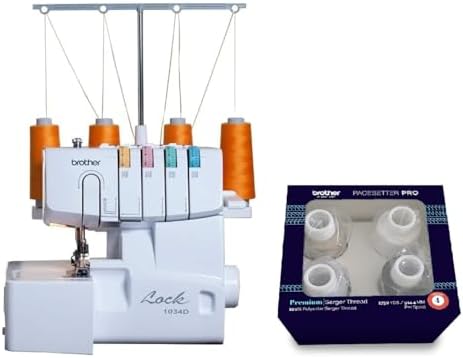
The Brother 1034D is the default first machine for a reason: it is the one most classes teach on, and Brother lists a three or four thread setup with color coded lay in threading and differential feed. Our serger buying guide compares it against the Singer and the Juki, and the beginner serger guide ranks them by how hard they are to thread.
Frequently Asked Questions
Can I sew knits without a serger? Yes. Use a ballpoint or jersey needle, a narrow zigzag or the built in stretch stitch, and do not pull the fabric through. The seam will hold and stretch. It will be bulkier and slower to sew than a serged seam, and the raw edges stay raw.
Should I buy a serger before I buy a better sewing machine? No. A serger cannot do buttonholes, zippers or topstitching, so it is always the second machine. If your main machine is struggling, replace that first and add the serger later.
Is a serger hard to learn? The sewing is easier than a regular machine, because there is no seam allowance to steer and the knife keeps the edge straight. The threading is the part with a learning curve, and it takes an afternoon, not a season.
Do quilters need a serger? Rarely. Quilt piecing uses a quarter inch seam pressed to one side and the raw edges end up enclosed in the quilt. The money goes further on a walking foot, a quarter inch foot and good thread.
What about the coverstitch hems on t-shirts? A serger does not make those. That double needle hem with the looped underside comes from a coverstitch machine, or you can fake it on a regular machine with a twin needle, which is what most people do.
The Bottom Line
Count the signs against your last five projects rather than against your ambitions. Knits, garments that get washed a lot, batches, and a finishing pass that takes longer than the sewing all point the same way. Quilting, home decor and mending do not, and in those cases a needle upgrade and a better light do more for your results than a second machine would. Read next: our serger buying guide and the serger or sewing machine comparison.