Last updated: August 22, 2026
The question usually arrives as a choice, and it is not one. People ask whether they should buy a serger or a sewing machine as though the two do the same job at different quality levels. They do not overlap much at all. One of them builds a garment, the other one finishes it, and a garment needs both jobs done.
What follows is the practical split: which machine does which task, what happens when you try to make one do the other’s work, and the order to buy them in if you are starting from nothing.
This article contains affiliate links. If you buy through them, we may earn a commission at no extra cost to you. Learn more.
Quick Answer
Serger or sewing machine: which one do you need?
- A sewing machine, first and always. It does buttonholes, zippers, hems, topstitching and anything that stops mid fabric.
- A serger, second. It trims, seams and wraps the raw edge in one pass, and it sews a seam that stretches.
- A serger cannot sew a lone straight line, backstitch or fasten anything. It is a finisher, not a builder.
- If you sew knits, the serger changes the result more than any sewing machine upgrade will.
Bottom line: buy the sewing machine, use it until seam finishing becomes the slow part, then add the serger.
Two Machines, Two Jobs
A sewing machine makes a lockstitch: one thread from above, one from the bobbin, locked together in the fabric. That stitch can start and stop anywhere, reverse on itself, and be placed exactly where you want it. Everything constructional about a garment depends on that.
A serger makes an overlock stitch: needle threads holding the seam, looper threads wrapping the cut edge from above and below, with a knife trimming just ahead of the needles. It runs off the edge of the fabric by design, which is why it cannot place a stitch in the middle of anything.
Why the Serger Seam Stretches
The looper threads travel diagonally across the edge rather than in a straight line, so the seam has slack built into it. Pull a serged knit seam and the thread geometry opens up instead of snapping. A straight lockstitch has no slack, which is exactly why it breaks on a stretched shoulder seam.
What Each Machine Finishes
Line the tasks up and the split is clean. The sewing machine owns everything with a start and a stop, everything decorative, and every fastening. The serger owns raw edges, knit seams and speed on repeated straight seams. There is one narrow band of overlap in the middle.
| Task | Sewing machine | Serger | Who wins |
|---|---|---|---|
| Buttonholes and zippers | Yes | No | Sewing machine, no contest |
| Hems and topstitching | Yes | No | Sewing machine |
| Finishing a raw edge | Zigzag or overcast foot | Trims and wraps in one pass | Serger, by a distance |
| Knit seams | Stretch stitch, workable | Stretches by design | Serger |
| Quilt piecing | Quarter inch seam, pressed open | Cannot press open | Sewing machine |
Making Your Sewing Machine Do the Serger’s Job
You can get most of the way on a regular machine, and for a lot of sewing that is the right answer. A three step zigzag over the raw edge, or an overcast foot with a little guide bar that stops the edge curling, finishes a seam allowance perfectly well on a woven fabric.
For knits, the substitutes are a narrow zigzag, the built in stretch stitch that looks like a lightning bolt, or a twin needle for hems. Combine those with a ballpoint needle and the seam holds. It is slower and bulkier, not worse in any way the wearer will notice.
The Overcast Foot Is Underrated
Most machines came with one and most owners have never fitted it. It holds the fabric edge flat under a small metal finger while the zigzag wraps over it, which is what stops the curled and gathered edge you get from zigzagging without it. If you have never tried it, do that before you spend money.

Making Your Serger Do the Sewing Machine’s Job
This one has a much shorter answer. It cannot. There is no buttonhole, no zipper foot, no reverse, no way to sew a seam that begins and ends inside the fabric, and no way to press a seam allowance open because the allowance has been trimmed away and wrapped.
The one place a serger works alone is a simple knit garment with no fastenings, and even then the hem usually goes back to the sewing machine or to a twin needle. Anyone who tells you a serger replaced their sewing machine is sewing a very narrow range of things.
The Buying Order
Sewing machine first, without exception. It is the machine that can make a whole garment on its own, badly finished but complete. Start there, learn the stitches it already has, and let the projects tell you what is missing. Our beginner machine guide covers the features that matter in a first machine.
The serger comes in when finishing has become the slow half of every project, or when you have started sewing knits and are tired of fighting them. At that point the entry machines cover everything a home sewer does for years, and the money above that buys smoother feed rather than more stitches.
The First Serger Most People Buy
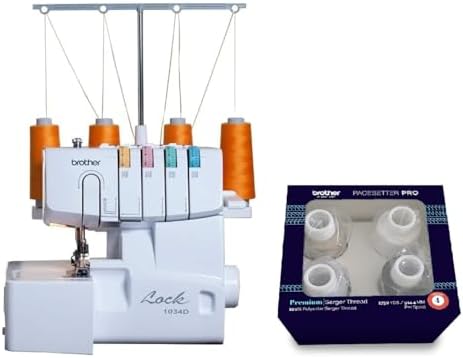
The Brother 1034D is the default and the machine most classes teach on. Brother lists a three or four thread setup, color coded lay in threading, differential feed and a maximum of 1,300 stitches per minute. Full detail is in our 1034D review.
If Knits Are the Whole Reason
Buy ballpoint needles for both machines at the same time. A jersey needle pushes between the knit loops instead of piercing them, which is the actual fix for skipped stitches and small holes in stretch fabric, and it costs a fraction of any machine.

What Owning Both Actually Looks Like
On a typical knit t-shirt the work splits about three ways. You cut, then the serger sews the shoulder, side and sleeve seams and finishes them in the same pass. Then the sewing machine hems the sleeves and the bottom, and topstitches the neckband down.
On a woven shirt the split changes. The sewing machine does most of the construction and all the details, and the serger runs down the seam allowances before assembly to stop them fraying. That is why the machines usually sit side by side rather than one replacing the other.
Frequently Asked Questions
Can a serger replace a sewing machine? No. It cannot sew buttonholes, install zippers, hem, topstitch, backstitch or place a stitch anywhere except along an edge. Any garment with a fastening needs a sewing machine somewhere in the process.
Can a sewing machine replace a serger? Mostly, at a cost in time and bulk. An overcast foot with a zigzag finishes woven edges well, and a stretch stitch or narrow zigzag with a ballpoint needle handles knits. What you lose is speed and the flat, trimmed look inside.
Which should a complete beginner buy first? The sewing machine. It is the machine that can complete a project on its own, and everything you learn on it transfers. A serger bought first will sit unused until you own the other one.
Do I need both for knit fabric? Not strictly. A ballpoint needle and a stretch stitch will get you a wearable t-shirt on a regular machine. The serged version is flatter, faster and looks like the shirts in your closet, which is why knit sewers buy sergers first.
Is a serger faster than a sewing machine? On the seams it handles, yes, because it combines three steps and runs at a higher top speed. Across a whole project the gain is smaller, since the details still happen at sewing machine pace.
The Bottom Line
These are not competitors. The sewing machine builds and fastens, the serger finishes and stretches, and a finished garment usually needs both. Buy the sewing machine first, exhaust the feet and stitches it already came with, and add the serger when raw edges and knit seams are the part slowing you down. Read next: our serger buying guide and the five signs you have outgrown one machine.