Last updated: August 22, 2026
Almost nobody buys a first sewing machine because they want a sewing machine. They buy one because a pair of pants is two inches too long, because a curtain needs taking up, because a favorite shirt split at the shoulder, or because a baby is due and somebody wants to make the quilt. The machine is a means to a job, and that is exactly the right way to shop for one.
The listings are written the other way around. They lead with stitch counts, with the number of feet in the box, with heavy duty stamped across the body. What actually decides the first evening is whether you can see the bobbin, whether the machine runs slowly when you ask it to, and whether the threading path is obvious enough to redo at eleven at night without the manual.
This article contains affiliate links. If you buy through them, we may earn a commission at no extra cost to you. Learn more.
Quick Answer
What actually matters in a sewing machine for beginners?
- Speed you can hold back. A slider that caps the top speed, or a pedal you can feather, keeps a first seam straight.
- A drop-in bobbin under a clear cover, so you can see thread running out instead of discovering it in the seam.
- A threading path printed on the machine with numbered arrows, plus an automatic needle threader.
- Enough weight to sit still. A machine that walks across the table on thick seams fights you the whole way.
Bottom line: buy on visibility, control and stability. Stitch count is the least useful number on the box.
What a Beginner Machine Really Has to Do
It has to sew a straight line at a speed you choose, finish a raw edge with a zigzag, put in a buttonhole, and let you fix your own mistakes. Everything past that is convenience. A machine that does those four things well beats one with sixty extra decorative patterns.
Look at what people actually sew in the first year: hems, seams in cotton and linen, a zipper or two, cushion covers, tote bags and a lot of repairs. Those use straight stitch, zigzag, an occasional blind hem and a buttonhole. Stretch stitches arrive with the first knit T shirt, and even then it is one or two of them.
The Four Features You Will Touch Every Single Session
Speed control, the bobbin system, the threading path, and the weight of the machine. Those four are in your hands from the moment you sit down, every time. A feature you use once a year can be worked around. A feature you fight with weekly is the reason a machine ends up in the closet.
Speed You Can Hold Back
Two things control speed: your foot on the pedal, and on some machines a slider that sets a ceiling regardless of how hard you press. The slider is the one beginners underrate. It turns a nervous first seam into a slow, steady one, and it is the same feature that makes a machine safe to hand to a child.
Mechanical machines usually give you the pedal alone, which is learnable but takes a few evenings. Computerized machines commonly add the slider plus a start and stop button. If you want the first hour to be calm, that is worth more than any stitch you will never select.
A Bobbin You Can See
The bobbin is the lower thread, wound on a little spool that sits under the needle plate. Drop-in bobbins load from the top through a clear cover, so you can watch the thread supply shrink. Front loading bobbins live in a removable case behind a door at the front, which is a perfectly good system but hides the problem until the seam stops locking.
For a first machine, drop-in wins. Not because it stitches better, but because the two classic beginner disasters, running out of bobbin thread mid seam and seating the bobbin backward, are both visible before they cost you a seam. Our guide to winding a bobbin covers the step most people get wrong.
A Threading Path You Can Follow Without the Manual
Every machine prints its threading route on the body: numbered arrows from the spool pin, down through the tension discs, around the take up lever, and down to the needle. On a good beginner machine those numbers are large, unambiguous, and visible with the light on. On a bad one they are molded into gray plastic in gray ink.
An automatic needle threader is the other half of this, a small lever that hooks the thread through the eye for you. Threading is also where most trouble starts, which is why we wrote a full walkthrough of the threading path.
Weight, and Why Light Is Not Always Better
A light machine is easy to store and it also skitters sideways when the needle hits a folded denim seam. A mid weight machine with a metal internal frame under a plastic shell stays planted, and you hear that difference before you see it in the stitch. Genuinely light travel machines make better second machines than first ones.
Beginner Machines by the Situation You Are In
The right first machine depends less on skill level than on the job that made you shop. Below are the four situations that cover most first purchases. Model reviews carry the detail, and the picks page lines them up side by side.
If You Want the Simplest Possible Start
A mechanical machine with a small stitch set, a dial to choose them, and nothing on screen. You turn the dial, you sew. Nothing to set up and nothing that behaves differently than it did last week. This is the machine for anyone who says they are not good with technology, and it is a genuinely good machine rather than a compromise.

If You Want Room to Grow Without a Learning Curve
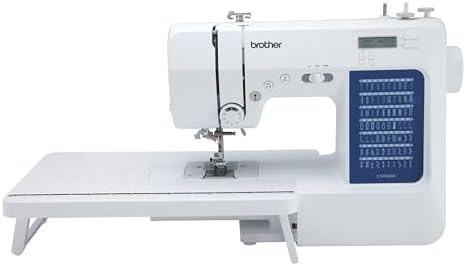
A computerized machine with a small screen, a speed slider and a start and stop button. Brother lists the CS7000X with 70 built in stitches, an LCD display, a quick set bobbin and a detachable wide table. That is more capability than a beginner needs, and none of it gets in the way.
If the Machine Has to Live in a Closet
A lightweight portable with a carry handle and accessories stored in the free arm compartment. Singer lists the M3500 with 32 built in stitches, a one step buttonhole, a built in needle threader and LED lighting, in a body meant to be moved. The trade off is the skittering on thick seams, which matters only if thick seams are your plan.

If Your First Job Is Hemming and Mending
You need straight stitch, zigzag, a free arm to slide a pant leg over, and very little else. A basic mechanical machine covers it, and so does anything above it. What you should not buy for this job is a handheld gadget, and our guide to hemming pants properly explains why the fast fix usually gets redone.
Mechanical or Computerized for a First Machine
Both are fine. Mechanical means dials and levers and a motor that answers only to your foot. Computerized means a screen, buttons, a speed limiter and more stitches. The reliability argument between them is weaker than the internet suggests, and the real difference is how you prefer to work.
Pick mechanical if you want fewer things between you and the seam, computerized if a speed slider sounds like relief rather than clutter. We put the two side by side in the mechanical against computerized comparison.
What Beginners Overspend On, and What They Skip
Wasted money goes to stitch counts and bundled extras. Skipped money goes to needles, decent thread and a second set of bobbins, which is exactly the gear that decides whether the machine behaves. The table sorts the common line items.
| Line item | What it is sold as | What it does in year one | Verdict |
|---|---|---|---|
| High stitch count | Versatility | You use straight, zigzag, blind hem, buttonhole | Low priority |
| Speed slider | A convenience toggle | Used at every session for months | Buy for it |
| Bundled thread set | Value pack | Often weak thread that snaps and lints | Replace early |
| Assorted needle pack | An afterthought | Fixes most skipped stitches and puckering | Buy first |
| Wide or extension table | Quilting extra | Steadies any large project, not just quilts | Nice to have |
Our guide to needle sizes and points is the one page to read before your first project, and what to buy alongside the machine covers the rest of the starter kit.
The Mistakes That Look Like a Broken Machine
In the first month, almost every problem is one of five things: the machine was threaded with the presser foot down, the needle is dull or the wrong type, the bobbin is in backward, the top thread jumped out of the tension discs, or lint has packed under the needle plate. None of those is a fault.
Rethread with the presser foot raised, fit a fresh needle, rewind the bobbin, and sew a test scrap before concluding anything. If it persists, the skipped stitch checklist and the breaking thread checklist run through the causes in order.
Frequently Asked Questions
How many stitches does a beginner really need? Straight stitch, zigzag, a blind hem and a buttonhole cover the first year comfortably. A stretch stitch becomes useful when you sew knits. Anything beyond that is decorative, and decorative stitches are fun rather than necessary, so do not let the count drive the decision.
Is a mechanical or a computerized machine better to learn on? Neither is better. Mechanical machines have fewer things to set and feel more direct. Computerized machines add a speed limiter, a needle position button and more stitches. Choose on how you like to work, and see our comparison for what differs in practice.
Should I buy a used machine to start? A serviced used machine from a dealer can be excellent value. An unserviced private sale is a gamble, because timing and tension work costs more than the machine did. See what to check on a used machine.
Do I need a heavy duty machine if I sew denim? Usually not for hemming jeans, which is a needle and thread question more than a machine question. It becomes a machine question when thick stacked layers are routine. See what the heavy duty label actually means.
The Bottom Line
Buy your first machine on the four things you touch every session: speed control, a visible drop in bobbin, a threading path you can follow without the manual, and enough weight to stay put. Stitch counts and bundled extras are noise. Spend what you save on needles, good thread and a spare set of bobbins, because those are what actually decide whether the machine behaves. Read next: beginner machine picks for six situations to see the models lined up, and the Brother XM2701 review for the model most first time buyers end up considering.