Last updated: August 22, 2026
Portable is one of the least useful words in sewing machine marketing, because it gets applied to three completely different products. It means a full size machine light enough to lift onto a table. It means a compact three quarter size machine built to live in a cupboard. And it means a battery powered handheld gadget that is not really a sewing machine at all.
Those three have almost nothing in common except the word. Someone who buys the third expecting the first is going to be disappointed within an evening, and that mismatch is behind a large share of the unhappy reviews in this category. So the first job is deciding which kind of portable you actually mean.
This article contains affiliate links. If you buy through them, we may earn a commission at no extra cost to you. Learn more.
Quick Answer
What should you look for in a portable sewing machine?
- Decide which portable you mean: a light full size machine, a compact three quarter machine, or a handheld gadget.
- Weight and a carry handle matter, but a stable base matters more. Very light machines walk across a table on thick fabric.
- Check that it takes a normal foot pedal and standard needles, since the odd ones out are the frustrating ones.
- A case or bag decides whether it actually travels, and most machines do not include one.
Bottom line: for real sewing, portable should mean a light full size or compact machine, not a handheld.
The Three Things Called Portable
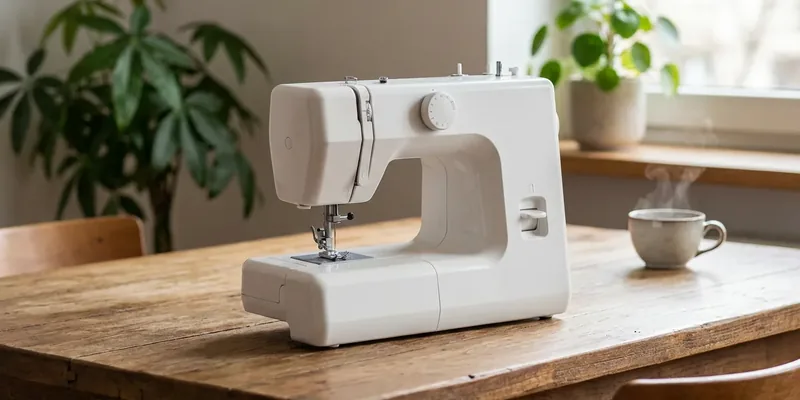
A light full size machine is a normal machine with a plastic body, a full width bed and a handle in the top. A compact machine is a smaller bodied machine, sometimes described as three quarter size, with a shorter bed and a lower profile. A handheld is a battery powered device the size of a stapler that makes a single thread chain stitch.
Only the first two are sewing machines in the sense most buyers mean. The third has its uses, which we cover honestly, but it is not a machine you learn on and not a machine that hems a pair of jeans reliably.
Why the Distinction Matters for Ratings
Reviews across this category are inconsistent precisely because the products are. Full size lightweight machines review much like any other machine. Handhelds and the very cheapest minis carry noticeably lower ratings, and the recurring complaints are about threading and stitches that pull out. That pattern is consistent enough to plan around, and it is covered in our honest look at handhelds.
Weight Is Not the Same as Stability
The lighter a machine is, the easier it is to carry and the more it moves while you sew. A very light machine on a smooth table shifts when you feed thick fabric or run at speed, which is distracting and makes accurate work harder. Metal internal frames add weight and take that movement away.
The practical target for most people is a machine light enough to lift with one hand from a cupboard to a table, and heavy enough that it stays put once it is there. If you are carrying it further than that, to a class or a friend’s house, the case matters as much as the machine. Our case and bag guide covers hard shells against padded bags.
The Table Matters as Much as the Machine
A light machine on a flexible folding table amplifies every bit of movement, because the table moves with it. The same machine on a solid surface behaves noticeably better. Before deciding that a machine is too light, try it somewhere sturdy and put a rubber mat underneath, since both cost almost nothing and often solve the complaint entirely.
Portable Machines by Situation
If You Want a Real Machine That Puts Away
A full size mechanical machine with a plastic shell and a metal internal frame is the mainstream answer. It sews everything a household needs, it lifts easily, and it stores upright in a cupboard. This is what most people should buy when they search for portable.

If the Machine Lives on a Small Table
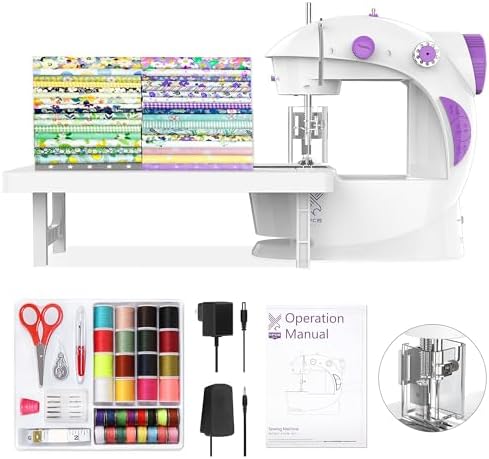
Compact machines with a shorter bed take up meaningfully less depth, which matters on a narrow desk or a folding table. You give up some space to the right of the needle, so large projects are harder, but for mending and small sewing they are pleasant to use.
If You Are Taking It to Classes
Look for a machine with a real handle molded into the body rather than a strap, and buy a padded case sized to the model. Also check that the foot pedal and cord unplug and store, since trailing cables are what break in transit.

If You Only Need Quick Fixes Away From Home
This is the one place a handheld makes sense: a hanging curtain, a hem you cannot get to a machine, a seam on something already mounted. Be clear about what you are getting. It makes a chain stitch that can unravel if the tail is not secured, threading is the step most people struggle with, and it is not a first machine.

The Three Types Compared
Set out plainly, the trade offs are easy to see.
| Type | What it sews | How it moves | Honest limitation |
|---|---|---|---|
| Light full size machine | Everything a household needs | Lifts to a table, stores in a cupboard | Still needs a table and a socket |
| Compact three quarter machine | Mending and small projects | Fits a narrow desk or a shelf | Less room to the right of the needle |
| Mini machine | Light fabric, short seams | Carries in one hand | Lower ratings, weak feeding on thick fabric |
| Handheld device | One straight line in light fabric | Goes anywhere, runs on batteries | Chain stitch can unravel, fiddly threading |
What to Check Before You Buy
Three details separate a portable machine you keep from one you resent. Whether it takes standard domestic needles, because an unusual needle system means ordering from one supplier forever. Whether the foot pedal is a normal pedal rather than a push button only design. And whether the bobbin is a common class, so replacements are easy to find.
The fourth is the free arm. A machine whose bed section removes to leave a narrow arm lets you sew cuffs, sleeves and pant hems in the round, which is most of what a household machine gets used for. If a compact machine lacks it, that is a bigger loss than the size saving. Bobbin classes and how to identify yours are covered in our bobbin fitment article.
Frequently Asked Questions
Are portable sewing machines any good? Light full size and compact machines are perfectly good, and many popular beginner machines are exactly that. The reputation problem comes from handhelds and the cheapest minis, which are a different product with different results.
Can a portable machine sew denim? A full size lightweight machine handles hemming jeans with the right needle, though it will move on the table more than a heavy machine. For frequent thick fabric work, see our heavy duty guide.
Do portable machines run on batteries? Handhelds and some minis do. Full size machines run on mains power, and that is not a limitation worth avoiding, because you need a table and good light anyway.
What is the difference between portable and mini? Mini describes size, portable describes carrying. A mini machine is always portable, but plenty of portable machines are full size. The mini category specifically is covered in our mini machine article.
Which model should I look at first? Start with the mainstream lightweight mechanical machines, then read a model review such as our Singer M3500 review to see how one of them behaves in practice.
The Bottom Line
Portable should mean a light full size or compact machine with a real handle, standard needles and a free arm, not a battery gadget. Buy the case separately if the machine actually travels, and accept that the lightest machines trade stability for weight. Read next: what mini machines really do and machines for travel and dorm rooms.