Last updated: August 22, 2026
Search for a mini sewing machine and you get two completely different products in one list. Some of them are compact machines from Janome, Singer and Brother with a real bobbin, a foot pedal and a free arm. Others are palm sized plastic boxes with a plastic gear train, a two AA battery motor and a stitch that comes undone when you look at it. Same search term, very different outcome.
This guide separates them. What makes a small machine a real machine, which small machines are worth owning, and how to spot the ones that will be back in the box within a week.
This article contains affiliate links. If you buy through them, we may earn a commission at no extra cost to you. Learn more.
Quick Answer
Which mini sewing machines are real machines?
- The ones with a bobbin, a foot pedal, a free arm and a named brand behind them. Janome, Brother and Singer all make compact models that qualify.
- The ones to skip run on AA batteries, have a plastic gear train, no foot pedal and no brand you can look up.
- A real compact machine handles light mending, kids’ projects, small spaces and travel. It does not handle denim hems or thick layers.
- If you need thick fabric, a compact machine is the wrong category. Buy full size and heavier.
Bottom line: small is fine, toy is not. Check for a bobbin case and a pedal before anything else.
What Separates a Small Machine From a Toy
Four features decide it. A bobbin underneath making a real lockstitch. A foot pedal, so both hands stay on the fabric. A free arm, the removable section that lets you slide a sleeve or a pant leg around the needle. And a metal needle bar mechanism rather than an all plastic drive.
Everything else is negotiable. Stitch count barely matters, since almost all sewing is straight stitch and zigzag. Speed does not matter on a machine this size. What matters is whether the stitch is locked from below and whether you can steer the fabric with two hands.
The Battery Question
Battery power is the clearest warning sign. A machine that runs on AA cells has a motor with very little torque, and torque is what pushes a needle through fabric. As the batteries drain the needle starts stalling mid stitch, which shows up as skipped stitches and a jammed bobbin area. Look for a machine with a wall plug and a pedal.
Mini Machines Worth Owning
Three compact machines cover most of the honest use cases: a small space machine for an adult, a light machine for a child or a beginner, and a full size machine that happens to be light enough to carry. Pick on where the machine will live rather than on the number of stitches.
Best Compact Machine for an Adult in a Small Space
Singer’s M1000 is the small machine that turns up most often in apartments and dorm rooms. Singer lists 32 stitch applications, a free arm, a four step buttonhole and a lightweight body. It is honest about what it is: a light machine for mending, hemming light fabric and simple projects, not a machine for structured sewing.

Best Small Machine From a Dedicated Manufacturer
Janome’s compact line, sold as the Fastlane and in several color variants, is listed at ten stitches, a free arm and a weight of around five pounds. Janome builds these in the same factory as its larger machines, which shows in how the mechanism feels compared with unbranded minis in the same size class. The older Sew Mini has been discontinued, so check what is currently listed.
Best If You Would Rather Have Full Size and Light
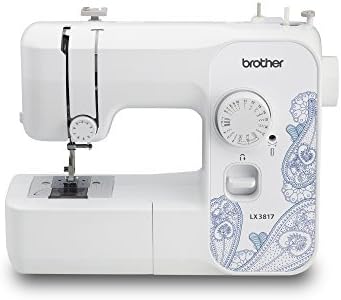
The Brother LX3817 is a full size machine that weighs little enough to move around, which for a lot of people is the better answer than a genuinely small machine. Brother lists 17 built in stitches, a jam resistant drop in bobbin and a free arm. You get a proper throat area and a standard presser foot system, which a compact body cannot give you.
What to Buy Alongside It
Small machines come with a starter set of accessories that runs out fast, and the bobbins are usually a specific class rather than a universal size. A spare set of the correct bobbins and a pack of universal needles in mixed sizes keeps a light machine running instead of sitting idle.

Comparing the Small Machine Options
The three categories overlap in size and not much else. The table compares them on what actually changes the experience: the stitch, the power source and the fabric they can take.
| Type | Stitch and bobbin | Power | Realistic fabric limit |
|---|---|---|---|
| Unbranded mini | Lockstitch, small bobbin, plastic drive | AA batteries or small adapter | Single layer cotton, at best |
| Compact branded machine | Lockstitch, standard bobbin class | Wall plug and foot pedal | Light wovens, jersey, simple projects |
| Light full size machine | Lockstitch, drop in bobbin | Wall plug and foot pedal | Most garment fabric, light denim |
| Handheld | Single thread chain stitch | AA batteries or adapter | One short seam in light fabric |
Who a Mini Machine Suits
Someone sewing on a kitchen table who has to put the machine away every evening. Someone in a dorm or a small apartment where there is no permanent sewing spot. A child or a teenager starting out with adult supervision. And anyone who wants a second machine that travels to a class without a case the size of a suitcase.
What all of those have in common is light fabric and short projects. Within that, a compact machine is a pleasure. Outside it, the same machine feels flimsy, and the complaint that follows is always the same: it skips, it jams, it moves on the table.
If It Is for a Child
Two things matter more than stitch count: a speed control so the machine cannot run away, and a finger guard around the needle area. Adult supervision covers the rest, and a low speed setting makes the difference between a first project that finishes and a first project that ends in tears. Our machines for kids guide covers the features to look for.
Who Should Buy Something Else
If your list includes hemming jeans, sewing bags, canvas, upholstery or several layers of anything, a compact machine is the wrong tool and no setting fixes it. Weight is what keeps a machine still while the needle punches through thick fabric, and a light machine walks across the table instead.
If the budget rather than the space is the reason you are looking at minis, look at the entry full size machines instead, since the price overlap is bigger than most people expect. Our budget machine guide covers what the cheapest real machines give you, and the handheld guide covers the far end of the small scale.
Frequently Asked Questions
Are mini sewing machines any good? The branded compact ones are, within their limits: light fabric, short seams and simple projects. The unbranded palm sized ones with battery motors are not, and the ratings across that group reflect it.
Can a mini sewing machine sew denim? A single layer of light denim, sometimes. A jeans hem with folded layers, no. That is a full size machine job with a denim needle, and there is more on it in our hemming guide.
What is the difference between a mini machine and a handheld? A mini machine has a bobbin and makes a locked stitch with two threads. A handheld makes a single thread chain stitch that unravels if you do not knot it. They are different tools, not different sizes of the same tool.
Is a mini machine good for a beginner? A branded compact machine with a foot pedal is a reasonable start, especially where space is tight. A battery powered mini is not, because the frustration lands on the learner rather than on the machine.
Do small machines use standard needles and bobbins? Branded compacts usually take standard household needles, but bobbin class varies by model. Check the manual before buying a bulk pack, since the wrong bobbin class is a common cause of tension trouble.
Why does my small machine skip stitches on jersey? Almost always the needle. Jersey needs a ballpoint or jersey point that pushes between the knit loops rather than piercing them. Fit one before you conclude the machine is at fault.
The Bottom Line
A small machine is a real machine when it has a bobbin, a pedal, a free arm and a brand behind it, and it is a toy when it runs on AA batteries and a plastic gear train. Buy the branded compact if space is the constraint, buy a light full size machine if it is not, and match your fabric expectations to the weight of the machine rather than to the listing. Read next: our budget machine guide and the handheld guide.