Last updated: August 22, 2026
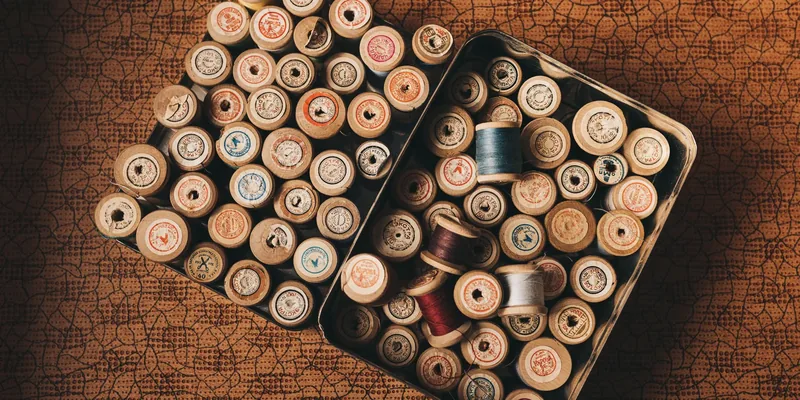
Somebody hands down a sewing box and it is full of beautiful old wooden spools in colors nobody sells anymore. You thread one up, sew four inches, and it snaps. You rethread, it snaps again, and by the third time you are convinced there is something wrong with your machine. There is not. The thread is simply too old and too badly stored to hold a seam together.
Thread has no printed expiry date, and it does not rot in the way food does. What happens is slower and less obvious: light, heat and damp gradually take the strength out of the fiber until the spool that looks perfect breaks under the tension of ordinary sewing. Storage is the whole difference between a spool that lasts decades and one that is scrap in five years.
This article contains affiliate links. If you buy through them, we may earn a commission at no extra cost to you. Learn more.
Quick Answer
How should you store sewing thread, and does it expire?
- Thread has no expiry date, but it loses strength with exposure. Superior Threads advises keeping thread out of direct sunlight and away from air vents.
- Sunlight is the worst offender, because ultraviolet light breaks down the fiber and fades the color at the same time.
- Dust is the quiet one. A film of dust on a spool goes straight through the tension discs and adds friction.
- Cool, dry and dark beats any clever storage system. A closed drawer or a lidded box does most of the work.
Bottom line: pretty thread racks on a sunny wall are the worst possible storage. Put the thread in a box and put the box out of the light.
Does Thread Actually Go Bad
Not on a schedule, and not in the way a sell by date implies. What ages is the fiber itself, and it ages at very different speeds depending on what it is made of and where it has been sitting. A polyester spool kept in a closed drawer can outlive the sewer who bought it, while a cotton spool on a sunny windowsill can be unusable in a few years.
The way you find out is a pull test rather than an inspection. Take an arm’s length off the spool, wrap it around both hands and pull firmly. Sound thread resists and then breaks cleanly. Degraded thread parts with almost no effort, often with a soft, fuzzy break rather than a snap.
Fiber Changes the Timescale
Cotton is the fiber that ages fastest, because it is a natural staple that responds to humidity and light. Polyester is far more stable and will sit in a drawer for a very long time without losing much. Rayon and silk sit in between and are more sensitive to storage conditions than polyester is. Which fiber you own matters, and polyester or cotton thread covers the rest of that difference.
The Three Things That Ruin Thread
Light, moisture and dust do essentially all the damage. Ultraviolet light attacks the fiber structure and fades the dye at the same time, so a faded spool is also a weakened spool. Damp encourages mildew on natural fibers and can rust anything metal it is stored with. Dust adds friction where the thread runs through the machine.
Temperature swings matter less on their own than the humidity that comes with them. A garage or an attic is a bad place for thread not mainly because of the heat but because the air moves between damp and dry repeatedly, and natural fibers absorb and release moisture every time.
Storage Options, From Worst to Best
Most sewing rooms store thread the way it looks nicest rather than the way it lasts longest, and the two are almost opposites. The table ranks the common setups by what they do to the thread rather than by how they look on a shelf.
| Where the thread lives | What it does to the thread | Better version | Effort |
|---|---|---|---|
| Open rack on a sunny wall | Fades and weakens the fiber | Move the rack away from the window | Free |
| Open rack in a dim corner | Fine for strength, collects dust | A cloth cover over the rack | Low |
| Loose in a basket or bag | Tangling and unwinding, dust | A lidded box with dividers | Low |
| Closed drawer or lidded box | Dark, dust free, stable | Add a desiccant pack if damp | Low |
| Garage, attic or basement | Humidity swings and mildew risk | Bring it indoors | One trip |
The ranking follows the storage advice thread manufacturers give, including Superior Threads, which recommends keeping thread out of direct sunlight and away from air vents. Nobody publishes a strength loss figure per year of window light, so treat the order as guidance rather than a measurement.
What to Do With Inherited Thread
Test before you sort. Pull test a length from each spool, and be honest about the results, because a spool of a color you cannot buy anymore is exactly the one you will be tempted to excuse. Anything that breaks with light pressure is not construction thread anymore.
The Failed Spools Still Have Uses
Thread that will not hold a seam is still good for basting, for thread tracing on a pattern, for tying up plants, and for testing tension on scrap. Some sewers keep a box of retired spools purely for basting, and it is a reasonable second life for something that cannot be trusted in a garment.
Wooden spools are worth a second look before they go into the basting box. Very old wooden spools sometimes have a rough seam or a splinter on the barrel that shreds thread as it comes off, which means the spool can be the problem rather than the thread. Wind a length onto a fresh bobbin and test it again before you condemn it.
Small Habits That Keep Thread Usable
Keep the thread end secured. A spool with the tail wrapped loosely around itself unwinds in a drawer and then tangles with the next spool, and the pulled loops that result feed unevenly. Most modern spools have a notch or a slit in the rim for exactly this.
Store the matching bobbin with the spool. It keeps colors together, stops half wound bobbins from becoming mystery objects, and means you are not winding a second bobbin of a color you already have. Thread breaking while you sew has causes beyond storage, and the ordered checklist is in thread that keeps breaking.
Frequently Asked Questions
Does sewing thread expire? There is no expiry date, but thread loses strength with exposure to light, heat and humidity. Cotton ages faster than polyester. The reliable test is to pull a length between your hands and see whether it resists or parts easily.
How do I test if old thread is still good? Take an arm’s length, wrap it around each hand and pull steadily. Good thread holds and then breaks with a snap. Degraded thread gives way softly and often frays at the break. Test each spool, since one bad spool in a box says nothing about the rest.
Is it bad to store thread on a wall rack? Only if the wall gets daylight. Thread on an open rack in a bright room fades and weakens, and it collects dust that goes straight into your tension discs. A rack in a dim corner with a cloth over it is fine.
Should thread be stored in the freezer or the refrigerator? No. That advice migrates over from storing certain foods and fabrics, and the condensation when the spool comes back to room temperature is the opposite of what you want. Cool, dark and dry at normal room conditions is the target.
Can I still use thread that has faded? Treat fading as a warning. The same ultraviolet exposure that took the color out has been working on the fiber, so pull test it before you put it in anything structural. It may be perfectly good for basting.
What is the best container for thread? Anything lidded, opaque and big enough that spools do not press against each other. Plastic craft boxes with adjustable dividers work well, and a silica gel pack helps in a humid room. Fancy is not required, dark and closed is.
The Bottom Line
Thread does not expire on a date, it degrades with light, damp and dust, so the beautiful rack in the window is quietly ruining your stash while a shoebox in a drawer preserves it. Pull test anything inherited, retire the failures to basting duty, and keep the rest closed and dark. Read next: thread weight and fiber explained, thread that keeps breaking, and our sewing kit guide for what belongs beside the machine.