Last updated: August 21, 2026
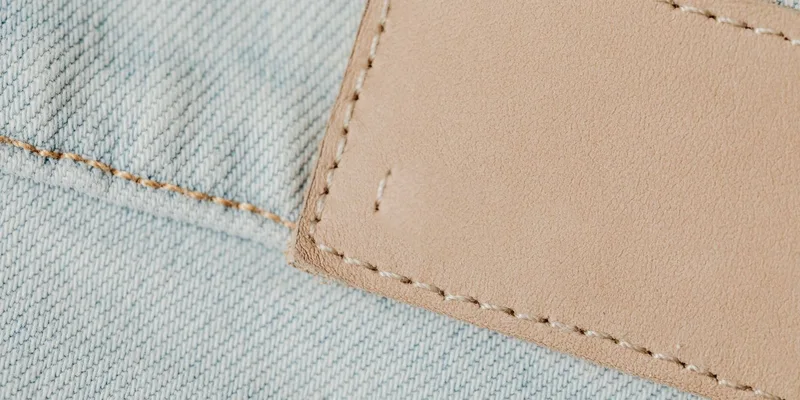
There is a hole in the knee of a pair of jeans you like too much to replace. You could patch it from behind and hope nobody notices, or you could put a rectangle of contrasting fabric on the front, run rows of running stitch across it in a color that shows, and turn the damage into the reason people ask about the jeans.
That is visible mending, and the supply list is short. Thicker thread than you sew with, a needle whose eye takes it, something to support the fabric while you work, and patch material. This guide covers what each of those does and which pieces are worth buying properly.
This article contains affiliate links. If you buy through them, we may earn a commission at no extra cost to you. Learn more.
Quick Answer
What supplies do you need for visible mending?
- Thick thread that shows. Sashiko thread and pearl cotton are the two standard choices.
- Needles with a long shaft and an eye big enough for that thread. Sashiko and darning needles both qualify.
- Support under the work: a darning mushroom for curves, a small hoop or a darning loom for flat areas.
- Patch material and a way to hold it, whether that is fusible backing or a few tacking stitches.
Bottom line: the needle and the thread have to match each other. Most first attempts fail because the thread is too thick for the needle’s eye, not because the stitching is hard.
Why the Supplies Are Different From Ordinary Mending
An invisible repair uses fine thread that disappears into the fabric. A visible repair is the opposite: the stitching is the decoration, so the thread has to be thick enough to read from across a room and strong enough to take the wear that made the hole in the first place.
That single change cascades. Thick thread needs a big eye, a big eye needs a longer, stronger needle, and a longer needle needs the fabric held taut so the stitch length stays even. Everything on the shopping list follows from the thread.
Thread That Shows
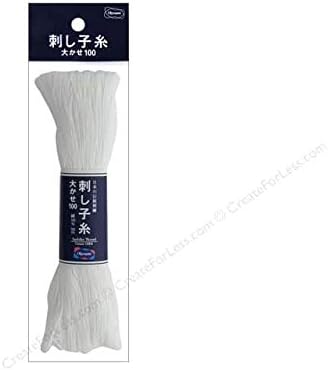
Sashiko thread is the traditional choice for the Japanese running stitch style most visible mending borrows from. It is a matte, tightly twisted cotton, noticeably thicker than sewing thread and not divisible into strands, which is why the stitches sit as clean solid lines rather than fluffing out.
Pearl cotton is the common alternative, sold in weights where a lower number is thicker. It has a sheen where sashiko thread is matte, so it reads as more decorative. Both wash and both come in strong colors, which is the point. Ordinary all purpose thread, covered in our thread guide, is too fine for this job.
Matching Thread to Fabric Weight
Heavy denim and canvas take the thickest thread comfortably. Shirting, jersey and fine wool do not, and a heavy thread in a light fabric cuts through it at the stitch holes over time. Step down a weight on anything lighter than a work shirt.
Needles That Take It
The needle has to have an eye that swallows the thread without forcing it, and a shaft long enough to load several running stitches at once before you pull it through. Sashiko needles are made for exactly this, long, strong and large eyed, and darning needles do the same job for wool repairs.
Test the pairing before you commit to a project. Thread the needle, then pull the needle along the thread. If it grips, the eye is too small and every stitch will fray the thread further until it snaps mid row. That is the single most common reason a first attempt goes badly.
Supporting the Fabric
Fabric that moves while you stitch gives uneven stitch lengths and a puckered patch. On a curved area like a heel, a sock toe or an elbow, a darning mushroom sits underneath and holds the fabric in a smooth curve, usually with a rubber band around the neck to keep it there.
For flat areas, a small hoop keeps the fabric taut, and a darning loom holds the warp threads for you so the weaving part goes faster on knitwear. None of these are essential and all of them make the result look deliberate rather than improvised.
What Goes in the Mending Box
The table splits the list into what you need on day one and what you add once you know you like doing this.
| Item | What it does | Buy first or later | Notes |
|---|---|---|---|
| Sashiko thread | Thick matte stitching that shows | First | Not divisible, one skein covers several repairs |
| Sashiko or darning needles | Long shaft, eye that takes thick thread | First | Test the eye against your thread before buying more |
| Darning mushroom | Supports curved areas from behind | First for socks and elbows | A smooth jar lid works in a pinch |
| Darning loom | Holds warp threads for woven repairs | Later | Speeds up knitwear repairs considerably |
What to Buy
Buy the thread and the needles together so you know they match, then add support tools for the kind of garment you actually mend. Socks and jumpers point at a mushroom, jeans and jackets point at patches.
Needles First
A set of sashiko needles gives you several lengths, and the long ones let you load a row of running stitches before pulling through, which is what makes the stitch line even. Keep them separate from your ordinary needles so the sizes do not get mixed up.

The Thread
A skein or a card of sashiko thread in a color that contrasts with the garment. White on indigo denim is the classic pairing and it is classic because it works. One skein goes a surprisingly long way, because running stitch uses less thread than it looks like it should.
Support for Socks and Elbows
A wooden darning mushroom, ideally one with a neck you can hold and a band to hold the fabric. This is the tool that makes darning a sock take fifteen minutes instead of an hour of chasing the fabric around.

Patches for Denim and Workwear
Iron on denim patches are the fastest way to stabilize a hole before you stitch over it. Put the patch behind the hole, press it, then work your running stitch rows across the front through both layers. The patch does the strength, the stitching does the looks and stops the patch peeling at the edges over time.

Speeding Up Knitwear
A darning loom holds the vertical threads across the hole so you only have to weave the horizontal ones. On a jumper with several moth holes it turns an evening’s job into a couple of episodes of something.

Technique Notes That Save Material
Work well outside the damage. The fabric immediately around a hole is thin and worn, so anchoring your stitching at the edge of the hole just moves the tear outward. Start and finish in fabric that still feels strong under your fingers.
Keep the tension even and slightly loose. A tight visible mend cups the fabric and the patch stands proud like a scab, which is the opposite of the flat, deliberate look you are after. The underlying stitches are covered in our hand mending guide, and the basic tools live in the repair kit.
Frequently Asked Questions
What is the difference between sashiko thread and pearl cotton? Sashiko thread is matte, tightly twisted and used as a single strand. Pearl cotton has a sheen and comes in numbered weights. Both are thick enough to show, so the choice is about the finish you want rather than performance.
Can I use ordinary sewing thread for visible mending? You can stitch with it, but it will not read as a design. It is also finer, so it takes many more rows to build the same strength across a hole. If the point is that the repair shows, use thread made to be seen.
Do I need a darning mushroom? Only for curved areas. A smooth jar lid, a tennis ball or a light bulb does the same job, which is what people used before mushrooms were sold as a product. For flat patches on jeans you do not need any support at all.
Will a visible mend survive the washing machine? Yes, if the thread is cotton and the stitching is anchored in sound fabric. Wash inside out and it will outlast the rest of the garment. Iron on patches hold better when stitched around as well, because the adhesive alone eventually lifts at the corners.
Is visible mending only for denim? No, but denim is the easiest place to start because it is heavy, it takes thick thread well, and the contrast of light thread on indigo is forgiving of uneven stitches. Knitwear is the other natural home for it, using darning rather than patching.
The Bottom Line
Start with a matched pair, a sashiko needle and sashiko thread, and check the thread slides freely through the eye before you buy more of either. Add a darning mushroom if you mend socks and elbows, iron on patches if you mend jeans, and a darning loom only once you know you enjoy the work. Stitch into strong fabric well beyond the hole and keep the tension loose. Read next: the four hand stitches worth knowing and what belongs in a clothing repair kit.