Last updated: August 21, 2026
Search for a walking foot sewing machine and you get two very different answers on the same page. Some results are machines with a feed system built into the head. Others are a chunky attachment that screws onto the machine you already own. Both are called walking foot, and for most home sewers only one of them is worth spending money on.
What they have in common is the job: moving the top layer of fabric at the same rate as the feed dogs move the bottom layer. That is the thing an ordinary presser foot cannot do, and it is behind most of the seams that come out shifted, puckered or short.
This article contains affiliate links. If you buy through them, we may earn a commission at no extra cost to you. Learn more.
Quick Answer
Do you need a walking foot machine or just a walking foot?
- For quilting, vinyl, plaids, knits and upholstery cloth at home: a bolt on walking foot on your current machine.
- Built in dual feed exists on some dealer machines, where it is part of the head rather than an attachment.
- True walking foot machines are industrial or marine tools on their own tables, and almost nobody needs one at home.
- Buy by shank. Low shank fits most Brother, Singer and Janome domestic machines, but check yours before ordering.
Bottom line: the attachment does ninety percent of what people want, for a tiny fraction of the price of a machine that has it built in.
What a Walking Foot Actually Does
An ordinary presser foot is passive. It holds the fabric down while the feed dogs underneath pull the bottom layer forward, which means the top layer is being dragged along by friction with the layer below it. On anything thick, slippery or sticky that friction is not enough, and the top layer arrives late.
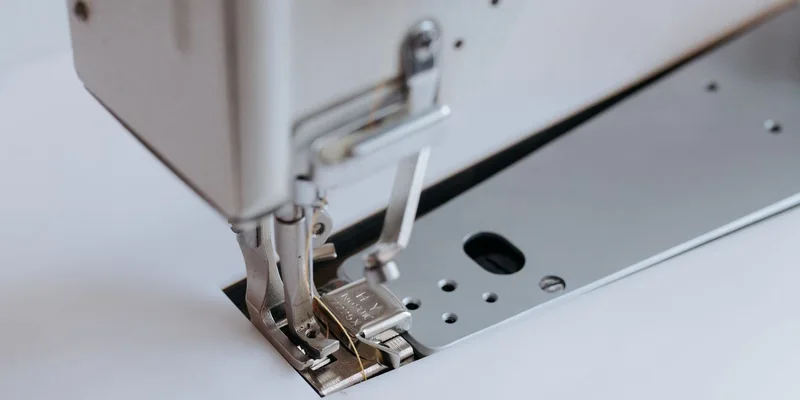
A walking foot adds a second set of feed teeth in the foot itself, driven off the needle bar, so the top surface is gripped and moved in step with the bottom. That is why quilters use it for straight line quilting and why anyone sewing vinyl or upholstery cloth reaches for it.
Even Feed, Dual Feed, Walking Foot
The names describe the same idea from different angles. Even feed foot is the older term for the attachment. Dual feed usually means a system built into the machine, such as Pfaff’s integrated dual feed, Janome’s AcuFeed on some models, or the dual feed on certain Bernina and Baby Lock machines. Walking foot is the everyday word for the bolt on version.
Buy the Attachment, Not the Machine
For home sewing the attachment is the sensible purchase. It costs a small fraction of a machine, it fits the machine you already like, and it solves the same problem. Machines with built in dual feed are pleasant to use, but nobody should replace a working machine to get one.
Low Shank: Most Domestic Machines
Shank is the distance from the presser foot screw to the needle plate. Most home machines from Brother, Singer and Janome are low shank, and a low shank walking foot is the default purchase. Check the fitting on your machine or its manual before ordering, because a high shank foot on a low shank machine will not sit correctly.

High Shank and Slant Needle Machines
Some quilting machines, some Janome models and older slant needle Singers need a different fitting. If your machine came with a separate adapter or the manual specifies high shank, buy the matching version rather than trying to make a low shank foot work with a spacer.

With a Guide Bar for Quilting
Most walking feet come with a quilting guide bar that slides into the back of the foot. It rides along the previous line of stitching so you can space parallel lines without marking the quilt top. If straight line quilting is your reason for buying, get the version with the bar and an open toe so you can see the line. Our quilting feet guide covers the rest of the set.

What It Fixes, and What It Does Not
A walking foot fixes anything caused by the two layers moving at different rates. It does not fix tension, it does not fix a blunt needle, and it will not turn a light machine into a heavy duty one. Knowing the difference saves a purchase that disappoints.
Where It Earns Its Keep
Quilt sandwiches, where the batting drags. Vinyl and coated fabric, where the foot sticks. Plaids and stripes, where the pattern has to line up at the end of a long seam. Knits, where the top layer stretches under the foot. Upholstery cloth and multiple canvas layers, where the top panel finishes short. Our upholstery guide and leather guide both lean on it.
Where It Is the Wrong Tool
Free motion quilting needs the feed dogs dropped and a darning foot, which is the opposite of what a walking foot does. Tight curves and small pieces are awkward under the bulk. Most walking feet also restrict how wide a zigzag you can use, so check the specification if you need decorative stitches.
The Options Compared
Three routes exist, and they are separated by price and by who they are for rather than by how well they feed.
| Option | How it works | Fits | Best for |
|---|---|---|---|
| Bolt on walking foot | Attachment driven off the needle bar | Most domestic machines, by shank | Quilting, vinyl, knits, layered bags |
| Built in dual feed | Feed system inside the machine head | Specific dealer models only | Sewers replacing a machine anyway |
| Walking foot machine | Compound or needle feed in the head | Industrial and marine machines | Upholstery and canvaswork as a trade |
| Roller foot | Rollers reduce friction on top | Most domestic machines, by shank | Sticky surfaces, single layer work |
The bottom row is there because a roller foot is often what people actually need when they think they need a walking foot. If the problem is stickiness on one layer rather than two layers slipping, the roller is cheaper and easier to handle.
Frequently Asked Questions
Will a walking foot fit my machine? Almost certainly, once you know the shank. Most Brother, Singer and Janome home machines are low shank, and low shank walking feet are the common type. Check your manual for the shank type or measure from the presser foot screw to the needle plate before ordering.
Is a walking foot worth it for quilting? For straight line and grid quilting, it is close to essential. The batting in a quilt sandwich drags on the layer below, so without even feed the top layer shifts and you get pleats on the back. Free motion quilting is a separate setup with a darning foot.
Do I need a walking foot for knits? It helps a lot on stable knits and on anything where the top layer stretches while you sew. A walking foot plus a ballpoint needle removes most of the wavy seam problem, though a serger is the tool if you sew knits constantly.
Can I zigzag with a walking foot? Some allow a limited zigzag width and some are straight stitch only. The foot opening is narrower than a standard foot, so check the specification for the model you are buying rather than assuming, and test on a scrap at a slow speed.
Are walking feet noisy? Yes, noticeably. The mechanism clatters as it steps, and the machine sounds busier than usual. That is normal and not a sign of anything wrong, though it is a reason to take the foot off again for ordinary sewing.
The Bottom Line
Almost everyone searching for a walking foot sewing machine wants a walking foot, not a machine. Find out whether your machine is low or high shank, buy the matching attachment, and keep it for the jobs where two layers refuse to travel together. Save the machine conversation for the day you are sewing upholstery or boat covers for a living. Read next: our upholstery guide and the quilting feet guide.