Last updated: August 22, 2026
You finish a t-shirt on your regular machine, turn it inside out, and the seam allowances are already fraying. You zigzag them, they still curl. You try a stretch stitch, and the shoulder seam pops the first time someone pulls it over their head. Nothing is wrong with your machine. It is not built for the job you are asking it to do.
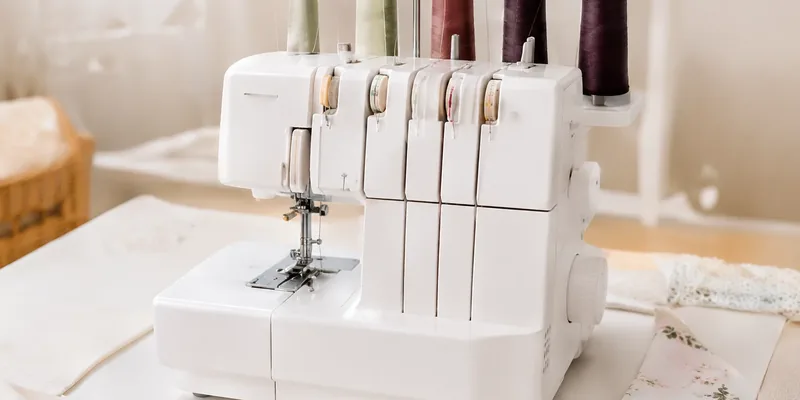
A serger trims, sews and wraps the raw edge in one pass, which is why the inside of a store bought shirt looks the way it does. This guide covers what that machine really adds, what it cannot replace, and which one makes sense as a first serger, including the honest version of the threading question that stops most people from buying one.
This article contains affiliate links. If you buy through them, we may earn a commission at no extra cost to you. Learn more.
Quick Answer
What does a serger do that a sewing machine cannot?
- It sews the seam, trims the excess and overcasts the raw edge in one pass, with two loopers wrapping thread around the cut edge.
- It sews a seam that stretches with the fabric, which is why knits behave on a serger and fight you on a straight stitch machine.
- It has differential feed, the feature that stops jersey from coming out wavy and stops thin wovens from puckering.
- It does not do buttonholes, zippers, topstitching or a single line of straight stitching, so it is a second machine, not a replacement.
Bottom line: if you sew knits or you care what the inside looks like, a serger changes the result more than a better sewing machine would.
What a Serger Actually Does
A serger runs two knives and two loopers alongside one or two needles. The knives trim the seam allowance to a set width, the needles form the seam line, and the loopers throw thread around the cut edge from above and below. The result is a finished seam that cannot fray, made in a single pass.
In the United States the machine is called a serger. In the United Kingdom and Australia the same machine is an overlocker, and older American manuals sometimes call the stitch an overlock. It is one machine with two names, and the stitch itself is the overlock stitch, which is why you will see both words on the same box.
Two, Three and Four Thread Stitches
The thread count tells you how the edge is built. A four thread overlock uses two needles and both loopers and gives you a seam plus a finished edge with a bit of redundancy, which is the everyday setting for garment seams. A three thread overlock drops one needle and gives a lighter, stretchier edge, good for finishing a single raw edge or for knits that need to move.
Two thread settings and rolled hems are the specialty end. A rolled hem pulls the edge over on itself and covers it in dense thread, which is the finish on a scarf or a napkin, and most home sergers get there by dropping the stitch finger rather than by swapping parts.
Differential Feed, the Feature Worth the Money
Differential feed means the front and rear sets of feed dogs can run at different speeds. Speed up the front set and the fabric is gathered slightly as it feeds, which stops jersey from stretching out into a wave. Slow it down and the fabric is stretched slightly, which pulls the pucker out of thin wovens.
This is the single feature that makes knits look right. Brother lists a differential feed ratio of 0.7 to 2.0 on the 1034D, and Singer lists the same 0.7 to 2.0 range on the ProFinish 14CG754, so the adjustment range at the beginner end of the market is broadly the same. What differs is how easy the dial is to reach while you are sewing.
Sergers by Situation
There are only a handful of home sergers most people actually choose between, and they sort by what you sew rather than by feature count. Pick on how much knit work you do, how much noise and vibration you can live with, and whether you want a second machine for hems as well.
Best First Serger for Knits and Everyday Garments
The Brother 1034D is the machine most people start on, and it is the one used in almost every beginner serger class in the country. It is a three or four thread machine with color coded lay in threading, a free arm and a differential feed. Brother lists a maximum of 1,300 stitches per minute. Owners who came to it from a regular machine consistently report that the threading looked worse than it turned out to be.
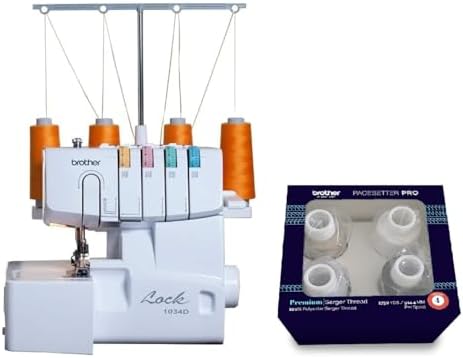
If You Want the Threading Path in Front of You
The Singer ProFinish 14CG754 is the other machine in this bracket, a two, three or four thread serger with color coded threading. Singer lists a differential feed range of 0.7 to 2.0, a stitch length of 2.0 to 4.0 mm and an adjustable cutting width. Buyers who choose it over the Brother usually mention the layout of the tension dials and the LED light rather than any stitch difference.
Best Step Up If You Sew Every Week
The Juki MO-654DE sits above the two machines above and is the one people move to when the first serger starts to feel light. Juki lists a maximum speed of 1,500 stitches per minute and a two, three or four thread setup. It runs heavier and quieter than the entry machines, and it is the point where the money buys a smoother feed rather than more stitches.

If the Hems Are the Part That Bothers You
A serger finishes the seam but it does not hem a t-shirt the way a factory does. That double line of stitching with the looped thread underneath is a coverstitch, and on the Brother 2340CV it is the only thing the machine does. Brother lists a maximum of 1,100 stitches per minute for the 2340CV. Buy it as a third machine once the serger has earned its place, not before.

The Thread Nobody Tells You About
A serger burns thread from four cones at once, and regular sewing machine spools will not last a project or sit properly on the spool pins. Cone thread built for serging is lighter and less lofty than all purpose thread, which is what keeps four layers of it from bulking up the seam. Buy cones in the neutrals you use most before the machine arrives, not after.

Comparing the Home Sergers People Actually Buy
Four machines cover most of the market at the home end. The differences are not in the stitches, since all of them do the four thread overlock you will use most, but in speed, in how the threading is laid out and in what the machine is really for.
| Model | Threads | Listed top speed | Best suited to |
|---|---|---|---|
| Brother 1034D | 3 or 4 | 1,300 spm per Brother | First serger, knits, general garment seams |
| Singer ProFinish 14CG754 | 2, 3 or 4 | 1,300 spm per Singer | First serger with a lit, open threading path |
| Juki MO-654DE | 2, 3 or 4 | 1,500 spm per Juki | Weekly sewing, smoother and heavier feed |
| Brother 2340CV | Coverstitch only | 1,100 spm per Brother | Hems and necklines, as a third machine |
Speeds and thread counts above are the figures the manufacturers publish on their own product pages and listings, not measurements of our own.
Threading Is the Real Objection
Almost everyone who hesitates over a serger is hesitating over threading. Four threads, two loopers, a path that goes behind a moving knife, and a rumor that if you break a thread mid project you have to start the whole sequence again. The rumor is half true, and the half that is true is manageable.
The order matters and the order is printed inside the machine door: lower looper, upper looper, right needle, left needle. Thread them out of sequence and the loopers cross, which is what produces the mess people blame on the machine. Our step by step threading walkthrough goes through the sequence and the tie on shortcut that saves you from rethreading from scratch.
What a Serger Does Not Replace
A serger cannot sew a buttonhole, install a zipper, topstitch a collar, backstitch, or sew a line of stitching that stops in the middle of the fabric. It also cannot sew a seam you plan to press open, because the seam allowance is trimmed and wrapped together. It is an addition to your setup, not an upgrade of it.
That is why the honest recommendation for a first machine is still a regular sewing machine. If you do not own one yet, start with our beginner machine guide and come back to the serger when the seam finishes are what is holding your projects back. The full side by side is in serger or sewing machine.
Frequently Asked Questions
Is a serger the same thing as an overlocker? Yes. Serger is the American term and overlocker is the British and Australian term for the same machine, and both make the overlock stitch. Listings sometimes use both words in one title because shoppers search for both.
Do I need a serger to sew knits? No, but it changes the result. A regular machine can sew knits with a ballpoint needle and a narrow zigzag or a built in stretch stitch. The seam holds, it just is not as flat, as fast or as clean on the inside as a serged seam.
How many threads should my first serger have? Four, with the option of three. The four thread overlock is the everyday garment seam and the three thread is what you use for lighter edges and rolled hems. Two thread settings are useful later and are not a reason to choose one machine over another.
Can a serger sew a whole garment on its own? Only the simplest ones. Anything with a zipper, a buttonhole, a hem or topstitching goes back to the regular machine. Most people cut, serge the seams, then hem on the sewing machine.
What is differential feed for in plain terms? It stops stretchy fabric from coming out wavy and thin fabric from coming out puckered, by running the front feed dogs faster or slower than the back ones. It is the dial you will use most after tension.
The Bottom Line
A serger is worth buying when seam finishing is the thing standing between your sewing and the result you want, which in practice means knits, garments that get washed a lot, and anything where the inside is visible. Start with a three or four thread machine with differential feed, learn the threading order once, and buy cones before the first project rather than during it. Read next: the five signs you have outgrown your sewing machine and our Brother 1034D review.