Last updated: August 21, 2026
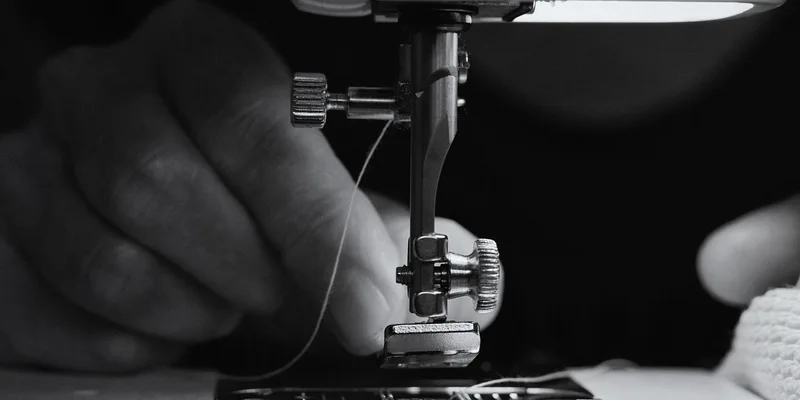
Almost nobody changes the needle often enough. It is a small metal part that looks identical after fifty hours of work and after five minutes, it costs very little, and there is no light on the machine that comes on when it is worn. So it stays in, project after project, and slowly turns into the cause of problems that get blamed on tension, on thread, on the machine and on the sewer.
The needle is the cheapest part of the whole setup and the one that touches the fabric thousands of times a minute. This page covers when to change it, what a worn one does to your stitching, and how to make the habit stick without keeping a logbook.
This article contains affiliate links. If you buy through them, we may earn a commission at no extra cost to you. Learn more.
Quick Answer
When should you change a sewing machine needle?
- Schmetz gives a rule of thumb of about eight hours of sewing, and at the start of each project.
- Immediately after the needle hits a pin, a zipper, a plate or the bobbin case, whether or not it looks bent.
- As soon as you hear a popping or thudding sound as the needle enters the fabric, which is the classic sign of a dull point.
- Whenever the fabric type changes in a way that needs a different point, since that is a free moment to fit a fresh one.
Bottom line: new project, new needle. Nobody counts hours, and the project boundary gets you close enough.
The Eight Hour Rule and Why It Is a Rule of Thumb
Schmetz recommends replacing a needle after roughly eight hours of use, and at the beginning of each project. That number is not a measured lifespan for every fabric. It is a working average, because a needle sewing quilting cotton wears very differently from one sewing canvas, synthetic suede or anything with an adhesive interfacing.
What actually wears is the point and the polished surface of the blade. The point rounds off and the thread starts to catch instead of sliding, and the reason Schmetz gives is straightforward: worn or damaged needles cause broken threads, skipped stitches, puckered fabric and popping sounds.
Fabrics That Eat Needles Faster
Anything abrasive shortens the life of a point. Densely woven synthetics, fusible interfacing with glue on it, metallic fabric, hook and loop tape and multiple layers at a hem crossing all take more off a needle in an hour than plain cotton does in an evening. Treat those projects as needing a fresh needle at the start and possibly another one partway through.
Change It Now, Not Later, After These Events
Some moments do not need a schedule. If the needle strikes a pin, a zipper stop, a snap, the needle plate or the bobbin case, replace it before you sew another seam. The damage is a microscopic burr on the point that you cannot see and the thread finds on every single pass.
The same goes for a needle that has been pulled sideways by dragging fabric. It may look straight and still be running out of true by a fraction of a millimeter, which is enough for the hook to miss the loop. If you regularly break needles at the same place, that is a separate problem and our page on needles that keep breaking covers the causes.
Symptoms of a Needle That Has Done Enough
A tired needle rarely announces itself as a needle problem. It shows up as thread breaking near the eye, stitches skipping in a pattern, a line of puckering that was not there last week, or a sound change as the point enters. The table sorts the common symptoms by what they usually mean.
| What you notice | Usual needle cause | First move | When it is not the needle |
|---|---|---|---|
| Popping or thudding sound | Blunt point, or too small for the cloth | Fresh needle, size up if heavy | Needle plate damage |
| Skipped stitches | Bent needle or wrong point for the fabric | New needle of the right type | Threading path or timing |
| Thread fraying and snapping | Burr in the eye after a strike | Replace, check thread path | Old brittle thread |
| Puckered light fabric | Needle too large, or dull and dragging | Smaller fresh needle | Tension or stitch length |
| Pulled threads on the surface | Damaged point catching yarns | Replace immediately | Fabric snag from handling |
The symptom list follows the failure modes Schmetz names for worn or damaged needles: broken threads, skipped stitches, puckered fabrics and popping sounds. The rest of the table is the ordinary order of checks, not a measured study.
How to Make the Habit Stick
Nobody tracks sewing hours, so tie the change to something you already do. Fitting a new needle when you cut out a new project takes ten seconds, happens at a natural pause, and gives you the chance to confirm that the point type suits the fabric you just cut. That single habit removes most needle related trouble.
A Place for the Old Ones
The reason people keep sewing on a used needle is that they cannot tell which needles in the case are new. Keep an old prescription bottle or a small tin beside the machine as the retirement box, and never put a used needle back in the packet. Sharps go in a sealed container in the trash rather than loose.
If you swap between fabric types a lot, a labeled pincushion with sections works better than a tin, because you can park a barely used jersey needle and find it again. What matters is that anything in the original pack is definitely new.
Keeping the Right Needles on Hand
The habit only works if there is a spare within reach. Most home sewers are well covered by universal needles in the middle sizes plus one pack of ball point needles for knits, and that combination handles the great majority of ordinary projects without a trip to the store at the worst moment.
The Everyday Pack Worth Keeping in the Drawer
An assorted universal pack in the common sizes is the one to keep stocked, because it covers cotton, shirting, twill and lighter denim, and it is what most machines are set up for out of the box.

Buy the specialist points as you meet the fabrics rather than up front. Our needle buying guide covers which specialist packs earn their place, and needle sizes explained covers how to read the numbers on the case.
Frequently Asked Questions
How often should I change my sewing machine needle? Schmetz gives a rule of thumb of about eight hours of sewing and a fresh needle at the start of each project. In practice the project boundary is the workable version, with an immediate change after any strike on a pin or a metal part.
How can I tell if a needle is dull? Listen and look. A dull point makes a popping sound as it enters, and it drags rather than slides. You can also draw the point lightly across a fingernail: a good needle glides, and a damaged one catches. The sound is the more reliable signal.
Does a bent needle always look bent? No, and that is the trap. A needle can be out of true by a fraction of a millimeter and look perfectly straight against a table edge, while still missing the hook on every other stitch. After a strike, replace rather than inspect.
Can I sharpen a sewing machine needle? No. The strawberry attached to a tomato pincushion is filled with emery to clean and smooth hand needles, and it does not restore a machine needle point or remove a burr in the eye. Needles are consumables and priced like it.
Does a new needle fix tension problems? Sometimes, which surprises people. A burr catching the thread mimics a tension fault exactly, so a fresh needle is the first thing to try before you touch a dial. If the stitch is still wrong afterward, work through the tension checks properly.
Do machine needles go bad in the packet? No. They are steel and they do not age on the shelf in normal storage. What ruins an unused needle is rust in a damp room or a knock that bends it, so keep them in the original case rather than loose in a tin.
The Bottom Line
A needle is the cheapest part of the machine and the one that decides most of what your stitching looks like, so change it at the start of every project and immediately after any strike on metal. Keep the fresh ones in the packet and the used one in a tin, and half the mysterious stitch problems stop happening. Read next: our needle buying guide, needle sizes explained, and the page on skipped stitches for the order of checks when a fresh needle is not enough.