Last updated: August 21, 2026
You are halfway down a hem and the stitching goes dotted. Two good stitches, a long jump, two more good stitches. The first thought most people have is that they bought the wrong machine. In almost every case the machine is fine and something small is off.
A skipped stitch is a mechanical miss with a short list of causes, and the list runs in a fixed order. Work through it from the cheapest end and most people fix it in ten minutes without spending anything. This guide follows that order, and says where a new needle genuinely is the answer.
This article contains affiliate links. If you buy through them, we may earn a commission at no extra cost to you. Learn more.
Quick Answer
Why does a sewing machine skip stitches?
- Rethread the top with the presser foot raised. Brother lists incorrect upper threading as a cause of skipped stitches, and a raised foot is what lets the thread seat in the tension discs.
- Put in a fresh needle, pushed all the way up, flat side to the back. Brother also lists a bent, dull or wrongly installed needle.
- Match the point to the fabric. A universal point on jersey is the classic skipper, and a ballpoint or jersey needle is the real fix there.
- Stop pulling the fabric through and let the feed dogs move it.
Bottom line: rethread, then change the needle, then check the point type. Those three steps clear most skipping, and none of the first two costs anything.
What a Skipped Stitch Actually Is
A stitch forms when the hook swings past the needle and catches the little loop of top thread that forms behind the needle eye. A skipped stitch means the hook arrived and the loop was not there, or was not where the hook could grab it. Nothing broke. One handshake got missed.
That mechanism explains why the fixes are so unglamorous. Anything that changes the shape or the timing of that loop causes skipping: a blunt point that pushes the fabric down instead of piercing it, a needle sitting a fraction too low in the clamp, top thread that is not under real tension, or fabric that is being dragged sideways while the needle is still down.
Why It Shows Up on Knits First
Woven fabric holds still and lets the needle make a clean hole. Jersey stretches away from the point and springs back, so the loop forms late and small. That is why a machine that behaves on cotton starts dropping stitches the moment you hem a T shirt.
Work Through the Free Fixes First
Before you buy anything, run the order a service technician runs. Rethread the top, change the needle, check the bobbin, adjust the tension, clean under the needle plate. Four of those five cost nothing, and between them they account for most skipping complaints.
1. Rethread the Top With the Presser Foot Up
Take the thread out completely and start again with the presser foot lifted and the needle at its highest point. Singer explains why the raised foot matters: it opens the tension discs so the thread can seat properly, and rethreading with the foot down leaves the thread lying outside the tension mechanism. Our threading walkthrough covers the path step by step.
2. Change the Needle, Even If It Looks Fine
You cannot see a blunt tip or a slight bend by eye. Schmetz lists skipped stitches, uneven stitches, shredded thread and popping sounds as the signals to change a needle, and Brother lists a turned, bent or dull needle as a cause. Push the new one up until it stops against the stopper, flat side of the shank to the back on almost every home machine, and tighten the clamp screw properly.
3. Check the Bobbin, the Tension and the Lint
Pop the bobbin out, check it is wound evenly and sitting the right way round, and drop it back in. Return the tension dial to the middle of its range while you are diagnosing, since Brother tells owners to set the dial back to 4 before troubleshooting anything else. Then brush the lint out from under the needle plate, because Brother lists dust and lint collected there as a cause of skipping in its own right.
When a New Needle Is Genuinely the Answer
If rethreading did not do it, the needle is the next thing to buy, and it is the cheapest part on the machine. Keeping a mixed pack of sizes in the drawer means you can swap a point instead of forcing the wrong one through, which is the single habit that prevents the most skipping.
Buy needles in an assortment rather than one size at a time. A pack that covers the light, medium and heavy sizes lets you match the needle to the fabric weight instead of leaving whatever was in the machine last month. There is more on sizes and points in our guide to sewing machine needles.

Knits Need a Different Point, Not a Sharper One
This is the one case where a specific needle really is the fix rather than a nice extra. A ballpoint or jersey needle has a rounded tip that slides between the loops of a knit instead of piercing them, and Schmetz recommends jersey needles in 70/10 to 90/14 for cotton knits and stretch needles at 75/11 for the springier ones. Swap the point and the dotted stitching usually stops on the first test scrap.
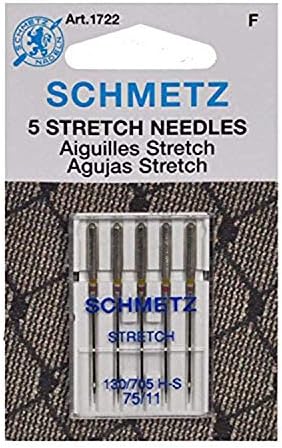
If you are not sure which point belongs on what you are sewing, our needle and fabric chart lays out the common fabrics in one table, and ballpoint compared with universal explains the tip shapes in more detail.
Habits That Cause Skipping
Two habits cause skipping directly. Pulling the fabric toward you drags the needle out of line while it is still in the cloth, so guide the fabric and let the feed dogs pull it. The other is starting right at the raw edge with the needle at the top, when starting with the needle down gives the machine something to bite on.
Skipping by Fabric and Situation
Different fabrics skip for different reasons, and the fix follows the reason rather than the fabric name. The table below maps the usual complaints to the first thing to change. Needle types and size ranges follow the Schmetz fabric recommendations.
| Situation | What is going wrong | First thing to change | Needle to reach for |
|---|---|---|---|
| Jersey or T shirt hem | Fabric stretches away from a sharp point | Point shape, not size | Jersey 70/10 to 90/14, or stretch 75/11 |
| Quilting cotton, sudden onset | Needle is blunt or slightly bent | Fresh needle | Universal 80/12 |
| Denim hem over a thick seam | Needle deflects on the bulk | Heavier needle, ease over by hand | Jeans 90/14 to 110/18 |
| Any fabric, from the first stitch | Top thread not seated in the tension | Rethread with the foot raised | Whatever suits the cloth |
Heavier work has its own set of demands beyond the needle, and our guide to sewing thick fabric goes through the foot, the thread and the stitch length together.
Is It the Machine After All?
Sometimes it is. If you have rethreaded, fitted a new needle of the right type, cleaned under the plate and tested on plain cotton and the machine still drops stitches, the hook timing may be out. That is a bench job with a screwdriver and a gauge, not something to attempt from a video.
Skipped stitches also turn up in owner reviews of the popular budget models more than any other complaint, which says less about a defect and more about who is buying them. Buyers report it most often on a first machine, and our Brother XM2701 review works through what that model does and does not forgive. If the machine is genuinely faulty, when to take it to a repair shop covers a service visit. Do not open the electrical side yourself.
Frequently Asked Questions
Why does my sewing machine skip stitches on knit fabric? A universal point pierces knit loops instead of sliding between them, so the loop the hook needs to catch forms badly. Fit a ballpoint or jersey needle. Schmetz recommends jersey 70/10 to 90/14 for cotton knits and stretch 75/11 for springier ones.
Can a new needle really fix skipped stitches? Often, yes. Schmetz lists skipped stitches among the signs that a needle needs replacing, and Brother lists a bent, dull or wrongly installed needle as a cause. A needle costs almost nothing, so it is worth doing before anything else you might pay for.
Does thread tension cause skipping? Tension on its own rarely causes a skip, but incorrect threading does, and the two look similar. Brother advises returning the tension dial to 4 and correcting the threading first, because tension cannot be adjusted properly if the machine is threaded wrong.
My machine skips only over thick seams. What now? The needle is deflecting on the bulk. Move up to a jeans needle, slow right down, and turn the handwheel by hand across the thickest part. A hump jumper or a folded scrap under the back of the foot keeps the foot level so the needle stays vertical.
Should I oil the machine to stop skipping? Oil does not fix skipping, and not every machine should be oiled. Check the oiling points in your manual first, as our guide to sewing machine oil explains.
The Bottom Line
Rethread with the presser foot up, fit a fresh needle of the right type, check the bobbin, put the tension back to the middle and brush out the lint. That sequence clears most skipped stitches, and only one step involves buying anything. Where it does, the answer is a needle rather than a machine, and on knits a ballpoint point genuinely solves it. Read next: our guide to sewing machine needles for sizes and points, and the needle and fabric chart for the fabric in front of you.