Last updated: August 22, 2026
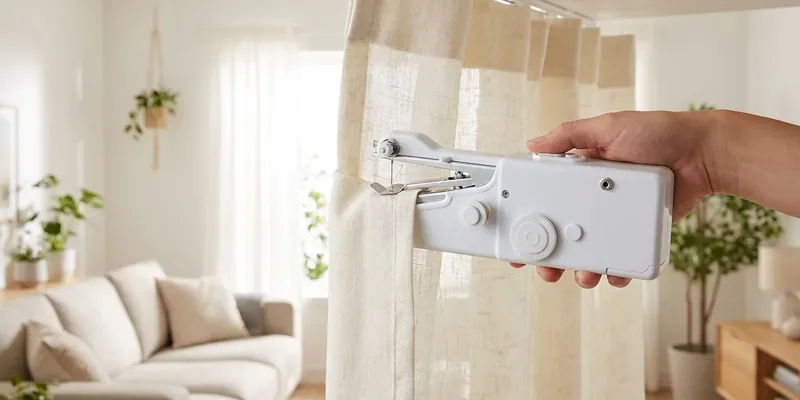
A handheld sewing machine is the size of a stapler, it costs less than a takeout dinner, and the product photos show someone hemming a curtain while it still hangs in the window. That last part is the honest use case. Nearly every other thing these devices are sold for is where the one star reviews come from.
This guide is deliberately not enthusiastic. A handheld does one narrow job acceptably and everything else badly, and the ratings across the category reflect that: most of these devices sit in the low to middle threes rather than the fours you see on real machines. Here is what the job is, what it is not, and how to get a usable seam out of one if you decide it fits.
This article contains affiliate links. If you buy through them, we may earn a commission at no extra cost to you. Learn more.
Quick Answer
What can a handheld sewing machine actually do?
- One short straight seam in light fabric, on something you cannot take off or take down. A hanging curtain, a drape hem, a seam in a garment on a mannequin.
- It makes a chain stitch from a single thread, so it pulls out if the end is not knotted. That is the single biggest source of angry reviews.
- It is not for denim, upholstery, layers, long seams or anything that gets washed weekly.
- It is not a first machine, and it will not teach you to sew.
Bottom line: buy one as a repair gadget for awkward spots, not as a small sewing machine. Those are different products.
What a Handheld Really Is
Inside the plastic body is a single needle driven by a small motor, a tiny bobbin, and a foot that clamps the fabric between two plates. You squeeze the fabric in, press the button, and it walks along making a single thread chain stitch. There is no bobbin thread locking the stitch from below.
That last point explains most of the reviews. A chain stitch is a loop pulled through a loop. Leave the tail loose and a tug on the right end unzips the whole seam. Knot it, or backtrack a few stitches and knot it, and it holds fine for what it is.
Battery or Adapter
Most handhelds run on four AA batteries with an optional adapter, and the motor slows noticeably as the batteries drain. A weak motor is the difference between a stitch that forms and a needle that stalls halfway through the fabric, so if you own one, keep fresh batteries in it or use the adapter for anything that matters.
The Jobs a Handheld Does Well
There is a real list and it is short. Hemming a curtain that is already hanging, where taking it down and rehanging it is the actual work. Closing a seam on upholstery in place. A quick fix on a garment someone is wearing at an event. Tacking a hem before you sew it properly later.
What those have in common is access. The handheld exists because it goes to the fabric instead of the fabric going to a machine. Once the fabric can come to a table, a real machine beats it on every measure, including speed.
The Jobs It Does Badly
Thick fabric first. Denim hems, canvas, webbing, multiple folded layers of anything: the motor stalls, the needle deflects and the stitch skips. Listings that mention denim are describing a single layer of light denim, not a jeans hem with four folds at the side seam.
Then anything long or anything laundered. The chain stitch is weaker than a lockstitch and the tension is set by how hard you squeeze the plates, so a long seam varies along its length. On a garment washed every week, that seam is a repair you will do again.
And It Will Not Teach You to Sew
People buy these for teenagers and for themselves as a starter machine, and that is the purchase that goes wrong most often. Nothing you learn on a handheld transfers: no bobbin winding, no threading path, no tension dial, no presser foot, no feed dogs. If the goal is learning, our beginner machine guide covers the real entry options.
Picks by Situation
There is not much to choose between handheld models mechanically, since most of them are the same design in different housings. What differs is build quality, whether the threading diagram is legible, and whether there is a brand behind it when it fails.
If You Want the Established One
The Singer Stitch Sew Quick is the best known handheld and the one most people mean by the category. It is a cordless single thread device for quick mending, and Singer sells it as a portable mending tool rather than as a machine. Buyers who use it for curtains and quick fixes rate it far better than buyers who expected a small sewing machine.

If You Want an Adapter in the Box
Battery power is where handhelds get weak, so a kit that includes a wall adapter, spare bobbins and a threader is worth more than a few extra listed features. The adapter keeps the motor speed constant, which is the difference between a stitch that forms and one that skips.

If the Fabric Can Come to a Table
Then buy a small real machine instead. A compact machine with a free arm, a proper bobbin and a foot pedal costs more but does everything a handheld does plus everything it cannot. Our mini machine guide separates the real machines from the toys.

The Spares You Will Need
Handheld bobbins are small, they hold very little thread, and the two in the box run out on the first project. A spare set plus a needle threader costs almost nothing and removes the most common reason these devices end up in a drawer.

Handheld, Mini or Full Size
The three categories get confused in listings because all of them are sold as portable. They are not the same thing, and the difference shows in what they can hold and what stitch they make.
| Type | Stitch | Good for | Falls apart on |
|---|---|---|---|
| Handheld | Single thread chain stitch | Hanging curtains, in place repairs | Thick fabric, long seams, laundry |
| Mini machine | Lockstitch, top and bobbin thread | Light mending, kids’ projects, small spaces | Denim hems, heavy or thick fabric |
| Full size mechanical | Lockstitch, adjustable | Garments, hems, zippers, most projects | Leather and upholstery weight work |
| Heavy duty | Lockstitch, stronger motor | Denim, canvas, bags, layered seams | Delicate silks without a change of needle |
Getting a Usable Seam Out of One
Threading is where most handhelds fail, and it is not the machine’s fault so much as the diagram’s. The thread has to pass the tension spring, the guide and the needle in a specific order, and one skipped step gives you a needle that moves and no stitch at all. Thread it slowly with the machine off and pull a long tail through before you start.
Then the finish. Sew a few stitches past your end point, cut the thread with a long tail, pull the loop of the last stitch through and knot it against the fabric. Skipping that step is what makes people say the seam fell apart the same day. A dab of fray sealant on the knot helps on anything that will be washed.
Squeeze Pressure Is Your Tension Dial
There is no tension adjustment to speak of, so how firmly the plates hold the fabric does that job. Too loose and you get loops underneath, too tight and the fabric will not advance. Practice on a scrap of the same fabric before you touch the curtain, since one pass is usually all you get.
Frequently Asked Questions
Do handheld sewing machines actually work? For one short straight seam in light fabric, in a place you cannot reach with a real machine, yes. For anything else the honest answer is no, and that mismatch is what the low ratings across the category are made of. There is a longer version in our full write up.
Why does my handheld seam pull straight out? Because it is a single thread chain stitch. Unlike a machine lockstitch, it unravels from one end if the tail is not secured. Backtrack a few stitches, knot the tail against the fabric and it will hold.
Can a handheld hem jeans? No. A jeans hem means several folded layers plus the bulk at the side seams, and the motor and needle in a handheld are not built for it. That job needs a full size machine and a denim needle, covered in our hemming guide.
Is a handheld a good first machine for a beginner? No. None of the skills transfer, and the frustration puts people off sewing entirely. A basic mechanical machine costs more and teaches you threading, bobbins, tension and feed, which is what sewing actually is.
Why does mine skip stitches or stall? Usually weak batteries, fabric that is too thick, or a threading step missed. Fresh batteries or the adapter, a lighter fabric and a careful rethread fix most of it. Our troubleshooting walkthrough goes through it in order.
What about the stitch guns sold alongside these? Those are not sewing machines at all. They are tagging guns that push a plastic barb through the fabric, the same fastener that holds a price tag on a shirt. We explain what they do in the stitch gun article.
The Bottom Line
Buy a handheld for access, not for sewing. Hanging curtains, upholstery in place, an emergency repair on something being worn: that is the list, and within that list a handheld is genuinely useful. Outside it, the device is why this category has the ratings it has. If the fabric can reach a table, a small real machine is the better purchase every time. Read next: do handheld machines actually work and our mini machine guide.