Last updated: August 21, 2026
Every machine comes with a little bag of metal and plastic feet, and most of them stay in the bag forever. They have no names printed on them, the manual shows them as line drawings without much explanation, and there is a strong temptation to leave the standard foot on and muddle through. That temptation costs you a lot of neatness.
The truth is that six feet cover almost everything a home sewer does, and four of those six are usually already in the bag. This page is about which six, what each one is for, and how to tell whether a foot you are looking at will even fit your machine.
This article contains affiliate links. If you buy through them, we may earn a commission at no extra cost to you. Learn more.
Quick Answer
Which presser feet will you actually use?
- The standard zigzag foot, for almost everything, and the zipper foot, for zippers and piping.
- The buttonhole foot that came with the machine, because buttonholes are miserable without it.
- A blind hem foot for invisible hems on trousers and curtains, and an overcasting foot to finish raw edges without a serger.
- A walking foot if you quilt or sew anything slippery or layered, which is the one most people buy separately.
Bottom line: four of the six are already in your accessory bag. Learn those first, then buy the walking foot when a project demands it.
What a Presser Foot Does
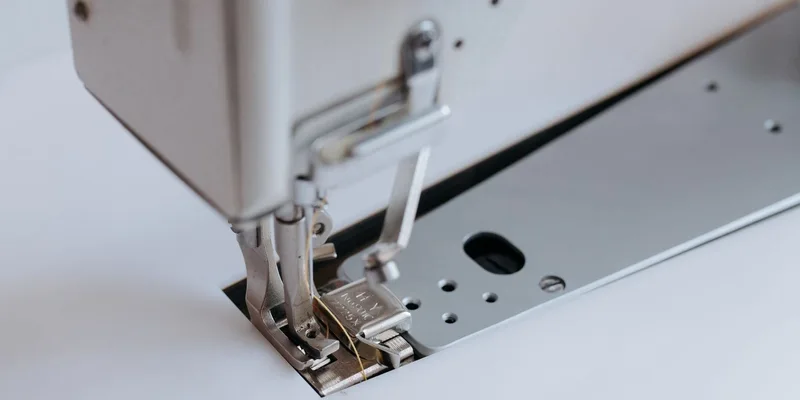
The presser foot holds the fabric down against the needle plate so the feed dogs can move it a measured amount for each stitch. That is the whole mechanical job. Every specialty foot is a variation that adds a groove, a guide, a channel or a mechanism so that a specific task becomes repeatable rather than a matter of steering.
Because the foot controls where the fabric sits, it also controls accuracy. A guide on the foot that runs along a fabric edge will hold a straighter line than your eye will over a meter of stitching, which is why experienced sewers change feet often and beginners assume it is fussiness.
Snap On and Screw On
Most home machines use a shank, a small holder attached to the machine with a thumb screw, and feet snap onto it. Some feet, including many walking feet, replace the whole shank and attach with the screw instead. Both are normal, and the instruction that comes with the foot tells you which it is.
Will It Fit: Low Shank, High Shank, Slant
Fit is the question to answer before buying any foot. The measurement is from the bottom of the presser foot when it is lowered to the center of the thumb screw. Sewing Parts Online describes roughly half an inch as a low shank machine and about an inch or more as a high shank machine.
Most domestic machines from Brother, Singer and Janome are low shank, which is why so many generic feet are sold as low shank universal. There are exceptions, including slant needle vintage Singers, so measure yours once and write it down rather than assuming.
The Six Feet Worth Knowing
These six cover garment sewing, home decor, mending and basic quilting between them. The last column is the fit note, since that is where purchases go wrong.
| Foot | What it does | You need it when | Fit note |
|---|---|---|---|
| Standard zigzag | General sewing, wide needle opening | Almost always | Came with the machine |
| Zipper foot | Stitches close to a raised edge | Zippers, piping, cording | Left and right positions |
| Buttonhole foot | Measures and sews the buttonhole | Any garment with buttons | Often model specific |
| Blind hem foot | Guides the fold for a hidden hem | Trousers, skirts, curtains | Pairs with the blind hem stitch |
| Overcasting foot | Wraps thread over a raw edge | Finishing seams without a serger | Use only with the matching stitch |
| Walking foot | Feeds top and bottom layers together | Quilting, vinyl, plaids, knits | Usually replaces the shank |
The list reflects the feet that ship with most current home machines from the major makers, plus the walking foot as the usual first separate purchase. Check your own manual for what is in your accessory bag.
The Four That Are Already in Your Bag
Zipper, buttonhole, blind hem and overcasting feet ship with the majority of home machines, and they are the ones that get ignored. Each of them turns a job that is fiddly by hand into one that the machine does mechanically, and none of them takes more than a scrap of fabric to learn.
Start With the Zipper Foot
It is the one with the most immediate payoff. A standard foot cannot get close to the zipper teeth, so the stitching sits too far out and the zipper gapes. The zipper foot is notched so the needle passes right beside the raised edge, and it does the same job on piping and cording.
The buttonhole foot is the second. On most modern machines it holds the button, measures the length and sews all four sides in one pass, which is a job that is genuinely difficult to do neatly any other way. Read the manual page for this one, because the sequence differs between machines.
The One Worth Buying: The Walking Foot
A walking foot adds a second set of feed dogs on top of the fabric, so both layers move together. It solves the problem where the bottom layer feeds normally and the top layer lags, which is what makes a quilt sandwich pucker, a plaid go out of alignment and a vinyl surface stick under the foot.
It is bulky, noisier than a normal foot and slower, so it is not something you leave on all the time. It is also the single accessory that makes machine quilting on a domestic machine feasible. The details of which version fits and how it compares to a built in dual feed system are in walking foot machines, and the quilting specific feet are in quilting feet.
What Not to Buy Yet
Large generic foot sets are tempting and mostly disappointing. A box of twenty feet contains perhaps four you will use, and the quality of the rest is variable enough that a poor gathering foot or rolled hem foot will convince you that the technique is beyond you when it is the tool that is at fault.
Buy feet the way you buy needles: when a project asks for one. A rolled hem foot bought for a specific scarf gets learned properly, while the same foot in a bulk set stays a mystery. The wider index of what exists, organized by the job rather than the name, is in presser foot types by job.
Frequently Asked Questions
Are presser feet universal? Not quite, but low shank snap on feet fit a very wide range of home machines from Brother, Singer, Janome and others. Measure from the bottom of the lowered foot to the center of the thumb screw to find out which shank you have before buying.
How do I know if my machine is low shank? Sewing Parts Online gives roughly half an inch from the bottom of the presser foot to the center of the screw for a low shank machine, and about an inch or more for a high shank. Most domestic machines are low shank.
Which presser foot is on my machine now? Almost certainly the standard zigzag or all purpose foot, which has a wide slot so the needle can swing for zigzag stitches. It is the default for straight and zigzag sewing on ordinary fabric.
Do I need a walking foot to quilt? For straight line quilting on a domestic machine it makes an enormous difference, because it stops the top layer from creeping. For free motion quilting you use a darning or free motion foot instead, with the feed dogs lowered.
Can I use a high shank foot on a low shank machine? No, not directly. An adapter can convert a high shank machine to take low shank feet, but the reverse does not work, because the geometry between the foot and the needle plate changes.
Why does my machine skip stitches with a specialty foot? Often the foot is not seated properly on the shank, or the needle is striking the foot at the edge of its swing. Turn the handwheel by hand through a full stitch before you use the pedal with any new foot.
The Bottom Line
Six feet do nearly all the work, four of them are already in the bag that came with the machine, and the walking foot is the one worth buying when quilts and slippery fabric enter the picture. Measure your shank once, buy feet for actual projects, and skip the twenty piece bargain sets. Read next: presser foot types by job, walking foot machines, and quilting feet for the three that quilters use most.