Last updated: August 21, 2026
Start with the thing the listings will not tell you: a stitch gun is a tagging gun. It fires the same plastic barbed fastener that holds a price tag onto a shirt, and it contains no thread at all. A handheld sewing machine does use thread, but only one, and it makes a chain stitch that pulls out if you do not knot it. Neither is a sewing machine in the sense most buyers have in mind.
So this is a three way comparison rather than a two way one, because for most of the jobs people buy these gadgets for, a needle and thread and ten minutes wins outright. Here is which one belongs on which job.
This article contains affiliate links. If you buy through them, we may earn a commission at no extra cost to you. Learn more.
Quick Answer
Stitch gun, handheld machine or needle and thread?
- Stitch gun: plastic fasteners, no thread. Good for basting, tacking and labels. Not a repair.
- Handheld machine: single thread chain stitch. Good for one short seam in light fabric that cannot come to a table.
- Needle and thread: the only one of the three that makes a repair which survives the laundry.
- None of them replaces a sewing machine, and none of them will teach you to sew.
Bottom line: if the fix has to last, thread wins. The gadgets are for speed and for access, not for strength.
What Each One Actually Does
The stitch gun pushes a hollow needle through the fabric and leaves a plastic filament behind, with a crossbar at each end holding it in place. Two layers are pinned together at one point. Nothing is sewn, and pulling the layers apart puts the whole load on that single plastic bar.
The handheld runs a small motor and a single needle, clamping the fabric between two plates and forming a chain stitch as it walks along. That is a real stitch made of thread, but it is a single thread loop chain, so it unravels from a loose end unless the tail is knotted.
And What Hand Sewing Does
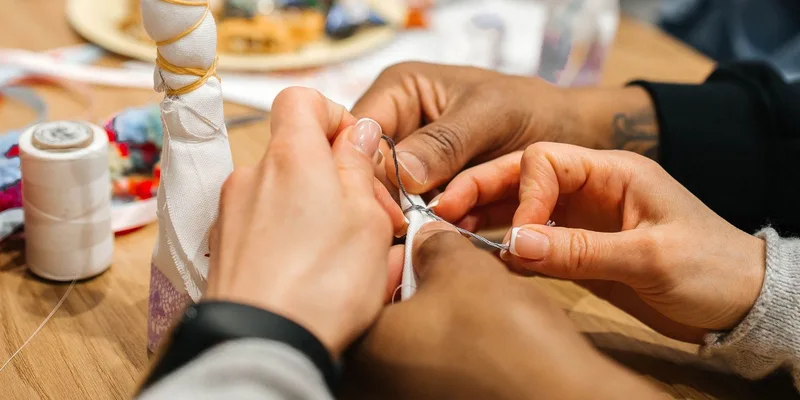
A backstitch puts a doubled thread through the fabric in overlapping steps, so every stitch is anchored by the ones on either side. It is the strongest of the three by a wide margin, it costs almost nothing, and on a split seam it takes less time than finding the batteries for the handheld.
Job by Job: Which One Wins
The comparison only makes sense per task, because these three tools barely overlap. Below is the split that matches what each one does mechanically rather than what the packaging claims.
| The job | Stitch gun | Handheld machine | Needle and thread |
|---|---|---|---|
| Split seam in a shirt | No, tears wider | Passable if light fabric | Best, backstitch |
| Curtain hem while hanging | Temporary only | Best, this is its job | Slow but works |
| Holding a hem to sew later | Best, one second each | Overkill | Basting stitch, slower |
| Jeans hem | No | No, motor stalls | Possible, hard on the hands |
| Attaching a label or tag | Best, built for it | No | Works, slower |
The Stitch Gun in Its Right Place
Judged as a basting tool the tagging gun is good. It holds a folded hem while you check the length, keeps a lining from shifting, tacks a costume piece that has to come apart tonight, and attaches labels to things you make and sell. All of those are temporary by definition, which is the point.
Buy the fine fabric grade rather than the retail grade, because the finer needle and filament leave a smaller hole. Test on a seam allowance first: jersey and loose wovens recover, tight wovens and coated fabrics keep the mark.

The Handheld in Its Right Place
The handheld earns its keep on access. Curtains hemmed in the window, a seam closed on a slipcover still on the sofa, a fix on a garment while someone is wearing it. It goes to the fabric, which is the one thing a full size machine cannot do.
The limits are real and they show in the reviews across the whole category. Light fabric only, short seams only, knot the tail or the chain unravels, and keep the adapter plugged in because a slowing motor is what causes most skipped stitches. Our handheld guide covers the buying side and this write up covers the honest verdict.

Why Thread Still Wins Most Repairs
Take a split side seam on a shirt. The tagging gun holds it at points and the fabric frays between them. The handheld will run a chain stitch along it if the fabric is light, and that seam is weaker than the original. A hand backstitch with doubled polyester thread is stronger than either, and invisible from the outside.
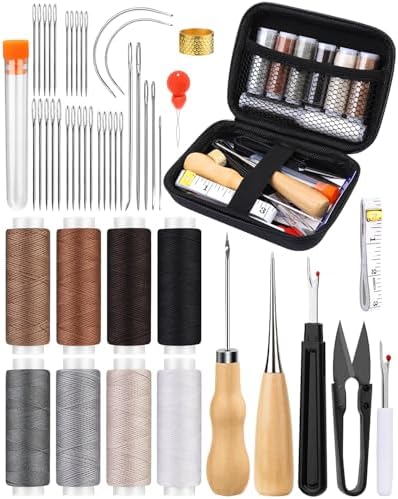
The tool cost is also the lowest. A pack of needles, a few colors of thread, a thimble and a pair of small scissors covers most household repairs for years. Our hand mending guide covers the three stitches that do almost all of it.
When None of Them Is the Answer
If you are hemming pants, sewing anything from fabric rather than fixing it, or working with denim, canvas or several layers, all three of these options run out at the same point. That is a full size machine job, and the difference in result is not subtle.
The same applies if the goal is learning. None of the three teaches bobbin winding, threading a tension path, stitch length or feed dogs, which is what sewing actually consists of. Start with our beginner machine guide instead, and keep the gadgets for the jobs they suit.
Frequently Asked Questions
Is a stitch gun better than a handheld sewing machine? They do different jobs. The gun is faster for basting and tacking and uses no thread. The handheld makes an actual stitch and can close a short seam. For a repair that lasts, neither beats a needle and thread.
Do stitch gun fasteners hold in the wash? Not dependably. The plastic barb can pull back through the weave when the garment twists in the drum, and on loose weaves it comes out the first time. Treat anything the gun holds as temporary.
Can a handheld machine repair a tear? On light fabric, over a short distance, yes, provided you knot the tail so the chain stitch does not unravel. On anything thick or on a garment washed weekly, hand sew it instead.
Which one should I keep in a travel bag? A small hand sewing kit. It weighs nothing, needs no batteries, passes security, and fixes a button, a hem and a split seam. The gadgets are bulkier and less capable away from home.
Are these safe for a child to use? Neither gadget is a good choice. The tagging gun has an exposed sharp needle and small plastic parts, and the handheld puts a moving needle very close to the fingers holding the fabric. Supervised hand sewing with a blunt needle is the usual starting point.
The Bottom Line
Three tools, three jobs, almost no overlap. The stitch gun is a fast plastic pin, useful for basting and labels and dishonest as a repair tool. The handheld is a real but weak stitch, useful when the fabric cannot come to a table. Thread is stronger than both and costs less, which is why it is still the default answer for mending. Read next: what a stitch gun really is and our handheld buying guide.