Last updated: August 21, 2026
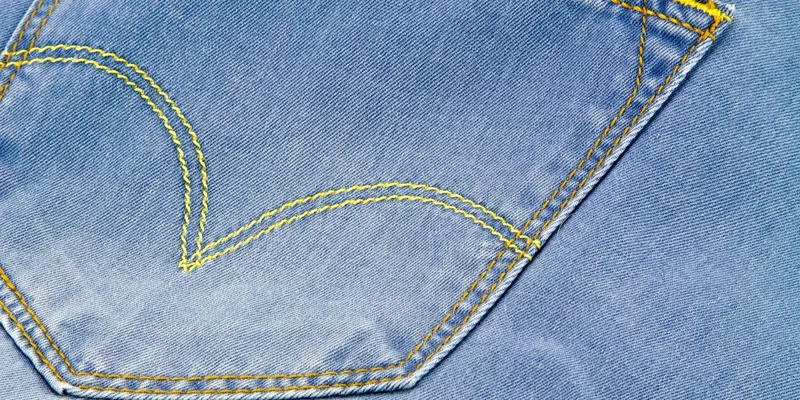
You finish a pair of jeans, hem them neatly with the all purpose thread that was already in the machine, and the hem looks wrong. Not badly sewn, just thin. The original hem had a fat gold line of stitching that read as part of the design, and yours reads as a repair. The difference is not skill and it is not the machine. It is that jeans are topstitched with a much heavier thread.
Topstitch thread is the one specialty thread that changes how a garment looks rather than how it holds together. It also needs a bigger needle, more tension and a different thread in the bobbin, which is why the first attempt usually goes badly. This guide covers what to buy and how to set the machine up so the seam looks deliberate.
This article contains affiliate links. If you buy through them, we may earn a commission at no extra cost to you. Learn more.
Quick Answer
What thread should you use for topstitching jeans?
- A dedicated topstitch thread. Gutermann lists its Top Stitch thread as 100 percent polyester in the Nm 30 class, for buttonholes, backstitching and denim double stitched seams.
- A bigger needle. Gutermann directs users to a needle from 100/16 to 120/19 for that thread.
- All purpose thread in the bobbin. Gutermann specifies a matching Sew All thread underneath rather than topstitch thread on both sides.
- A longer stitch. Heavy thread in a short stitch looks crowded, and a longer stitch is what reads as a factory jeans seam.
Bottom line: heavy thread on top, normal thread in the bobbin, a needle with an eye big enough to carry it, and a test on a folded scrap before you touch the garment.
What Topstitch Thread Is, and What It Is For
Topstitch thread is a heavy, smooth, usually polyester thread designed to be seen. Gutermann describes its Top Stitch as 100 percent polyester and lists it for buttonholes, backstitch and denim double stitched seams, noting that the thicker thread covers ground with fewer stitches than a lighter thread does.
That covering power is the whole appeal. A single line of heavy thread reads as a design line on a jacket, a bag or a pair of jeans, where the same line in all purpose thread disappears into the fabric. It is a decorative decision that happens to add a little strength rather than a strength decision.
Where It Is Not the Right Choice
Topstitch thread is not a construction thread for the seams inside a garment, and it is not a substitute for a genuinely heavy duty thread on load bearing seams in canvas or upholstery. It is thicker than all purpose thread, and that is not the same as being built for strain. For seams that are pulled hard, see heavy duty thread.
The Setup That Makes It Work
Four changes turn a messy heavy stitch into a clean one: a larger needle, all purpose thread in the bobbin, a longer stitch length, and more top tension than usual. Gutermann is explicit about two of those, calling for a needle in the 100/16 to 120/19 range and a matching Sew All thread in the bobbin, and noting that the thread needs more machine tension.
The reason the bobbin stays light is geometry. A lockstitch pulls the bobbin thread up into the fabric, and two heavy threads meeting inside a denim seam creates a bulky knot that shows on both sides and jams the race. Heavy on top, standard underneath, is the standard arrangement.
Matching Thread, Needle and Job
The table pairs the common visible stitching jobs with the class of thread and the needle that carries it. Needle sizes here follow the manufacturer guidance for the thread class rather than any measurement of our own.
| Job | Thread class | Needle | Stitch length |
|---|---|---|---|
| Jeans hem and side seams | Topstitch, Nm 30 class | 100/16 topstitch or jeans point | Long |
| Jacket edge stitching | Topstitch or heavier all purpose | 90/14 to 100/16 | Medium to long |
| Buttonholes on denim | Topstitch | 100/16 | Machine default |
| Bag straps and edges | Topstitch or heavy duty polyester | 100/16 to 110/18 | Long |
| Fine fabric detail stitching | All purpose or 40 wt | 80/12 to 90/14 | Medium |
The jeans row follows Gutermann’s own guidance for Top Stitch thread. The remaining rows are conventional pairings used by garment sewers, not tested figures.
What to Buy
The shopping list is short: one spool of topstitch thread in the color you want to see, a pack of needles with an eye big enough to carry it, and if you sew a lot of denim, a heavier polyester for the seams that take strain. Everything below is grouped by the job rather than by brand.
The Standard Choice for Jeans and Bags
A polyester topstitch thread in the Nm 30 class is what gives the recognizable heavy jeans line. Spools are usually short, because you use it only on visible seams, so buy the length that covers the garment rather than the biggest spool on the shelf.

The Needle That Carries It
A topstitch needle has a longer eye and a deeper groove specifically so a heavy thread runs without shredding, and it is the part people skip. Trying to force topstitch thread through a standard 80/12 universal is the most common reason the first attempt frays and breaks.

If You Are Sewing Jeans Specifically
Denim wants both the visible thread and a point shaped to go through a tight twill weave without deflecting, and a jeans or denim point does that job. Buying the two together saves an evening of skipped stitches at the hem.

When the Seam Takes Real Load
Bag straps, outdoor gear and upholstery seams need strength rather than only visibility, and that is a different thread. A bonded or heavy duty polyester is the right family there, and it is heavier than topstitch thread again.

Getting the Look Right on the Garment
Test on a folded scrap of the same fabric with the same number of thicknesses as the real seam, because tension that is right on a single layer is often wrong on a hem. Adjust the top tension until the stitch sits on the surface without pulling the bobbin thread up, then write the setting down.
Two Rows, Evenly Spaced
The classic jeans look is two parallel rows a few millimeters apart, and evenness matters more than the distance. Use the edge of the presser foot, a seam guide or a marked line of tape on the bed as a reference rather than trying to eyeball it. Our guide to sewing denim covers the hem crossings where those rows usually go crooked.
Go slowly over the thick crossings, and use the handwheel through the worst of them rather than the pedal. If the machine stalls or the needle deflects there, that is a machine capability question rather than a thread question, and sewing thick fabric covers what helps.
Frequently Asked Questions
Can I use topstitch thread in the bobbin too? Not normally. Gutermann directs users to a matching Sew All thread in the bobbin with its Top Stitch thread. Two heavy threads meeting inside the fabric creates bulk at the lockstitch knot and puts unnecessary strain on the bobbin case.
What needle do I need for topstitch thread? Gutermann lists 100/16 to 120/19 for its Top Stitch thread. A topstitch point in that size range has a longer eye and a deeper groove than a universal, which is what stops the thread from shredding as it runs.
Why does my topstitch thread keep breaking? Usually the needle eye is too small, the tension is set for a lighter thread, or the spool is feeding badly from the wrong pin. Fit the right needle first, then adjust tension, then check how the thread comes off the spool.
Is jeans thread the same as topstitch thread? Broadly yes. Thread sold as jeans thread is a heavy polyester in the same weight family, often in the gold and orange shades that denim is stitched with. Read the weight and the recommended needle rather than the name on the label.
Can I get the look with regular thread instead? Partly. Two strands of all purpose thread through one needle, or a triple stretch stitch, both thicken the line, and neither matches the flat solid look of real topstitch thread. They are useful when you cannot get the color you need.
What stitch length should I use? Longer than your default. Heavy thread in a short stitch crowds and can look lumpy, and the long stitch is part of what reads as a factory jeans seam. Test on the folded scrap and pick the length that looks right to you.
The Bottom Line
Topstitch thread is a decorative thread first, so buy it in the color you want to see, put ordinary thread in the bobbin, fit a needle with an eye big enough to carry it, and lengthen the stitch. Test on a folded scrap with the same number of thicknesses as the real hem, and the seam will look deliberate instead of repaired. Read next: sewing machine for denim, heavy duty thread for seams under load, and our needle guide for eye size and points.