Last updated: August 21, 2026
This is the fork in the road for almost every first machine. Two brands, similar prices, similar shelves, similar promises on the box, and no obvious way to tell them apart from the outside. Ask online and you get brand loyalty rather than an answer, usually attached to a story about somebody’s mother.
There is a real difference, but it is not the one the boxes argue about. It is not stitch count and it is not who has the longer history. It is the shape of each lineup: what the two brands put their engineering into, and therefore which one has a machine that matches the pile of fabric next to your table.
This article contains affiliate links. If you buy through them, we may earn a commission at no extra cost to you. Learn more.
Quick Answer
Should you buy a Brother or a Singer sewing machine?
- Brother if you are new and want the easiest first evening: automatic threader, clear drop in bobbin, printed threading path.
- Singer if denim, canvas and household repairs are the reason you are buying, because the Heavy Duty line is built around that.
- Brother if you want computerized features for the money, since the CS line is where the speed slider and wide tables live.
- Neither if you want a machine to keep for decades without service, which is a dealer brand question.
Bottom line: match the brand to your heaviest fabric. Light and medium sewing leans Brother, thick seams lean Singer Heavy Duty.
The Difference That Actually Decides It
Brother competes on ease and on features per dollar. Singer competes on the heavy duty shelf and on the strength of its name. That shows up directly in the products: Brother’s most recommended machines are beginner focused, and Singer’s most recommended machines are the ones with the metal frame parts and the stronger motor.
So the useful question is not which brand is better. It is what you are going to sew this year. A person hemming curtains and sewing a child’s costume has a different correct answer from a person who repairs canvas gear and shortens jeans, even at the same budget.
Where Brother Wins
Brother wins on the first evening. Its retail machines put an automatic needle threader, a jam resistant drop in bobbin under a clear cover and printed threading diagrams on machines at the very bottom of the range. Those three things remove most of the reasons a beginner gives up in week one.
The Computerized Tier Is Where the Gap Is Widest
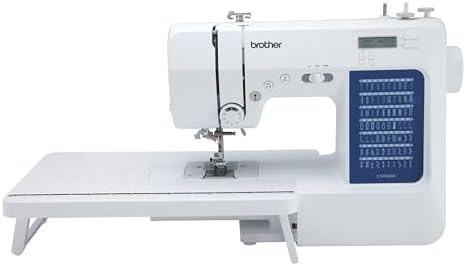
Brother’s CS line adds the controls that matter more than stitch count: an adjustable speed slider, needle up and down, and drop feed for free motion work. Brother lists 70 built in stitches and a detachable wide table for the CS7000X, and 60 stitches for the CS5055, both with LCD selection.
If your shortlist is a computerized machine for garments and quilts, Brother is generally the better value at retail. The CS7000X review covers the model most people land on, and computerized or mechanical settles whether you need a screen at all.
Where Singer Wins
Singer wins the thick fabric shelf. The Heavy Duty 4400 machines are built around a stronger motor, metal frame parts and a higher presser foot lift, and that is a coherent product rather than a sticker. If your reason for buying is denim hems, canvas totes or household repairs, this is the line to look at first.
The label deserves a caveat, and we give it one everywhere: heavy duty is a marketing term, not a standard, and none of these machines are workroom machines. What they do offer is more mass and more pushing power than a light plastic bodied machine, which you feel the moment a seam gets thick. The four numbers are separated in the Heavy Duty comparison, and the most reviewed one gets an honest look in the 4423 review.

What They Are Equally Good At
Both brands make perfectly usable light mechanical machines for hemming, mending and simple garments, and at that tier the choice barely matters. Both are sold everywhere, both carry stitch counts far beyond what anyone uses, and both have huge review counts that mostly describe threading trouble rather than failures.
Both Also Share the Same Weak Point
Neither brand’s retail machines are built to be serviced by a shop for twenty years. They are made to a retail price, and when the timing goes out on a cheap model the repair can cost more than the machine did. That is not a scandal, it is the tier, and it is why dealer brands exist. Our take on that trade is in what the dealer price buys.
Side by Side
The table below is the honest summary. Read the last column first, since it is the only one that changes the answer.
| Question | Brother | Singer | Who should care |
|---|---|---|---|
| Easiest first evening | Threader, clear drop in bobbin, printed path | Similar on newer models, less consistent low down | Complete beginners |
| Thick fabric | Strong and Tough line only | Heavy Duty 4400 line, the brand’s strength | Denim, canvas, repairs |
| Computerized value | CS line, speed slider and wide table | Quantum Stylist, long stitch library | Garment and quilt sewers |
| Long term servicing | Retail tier, limited | Retail tier, limited | Anyone planning to keep it decades |
How to Choose in Five Minutes
Write down the three heaviest things you expect to sew in the next year. If none of them is thicker than a pair of jeans at the hem, buy on ease and features, which points at Brother. If two of them involve stacked denim, canvas or webbing, buy on frame and motor, which points at Singer Heavy Duty.
Then check one more thing before you order: whether you want a dial or a screen. That single preference splits both catalogs cleanly, and it matters more day to day than the badge does. If you are still torn, start from what actually matters in a beginner machine and work forward from the features rather than the brand.

Frequently Asked Questions
Is Brother or Singer better for a beginner? Brother, in most cases. The automatic threader, the clear drop in bobbin cover and the printed threading path are standard far down the Brother range, and those are the features that keep a nervous beginner sewing rather than stuck. See our beginner picks for situations where that flips.
Which brand lasts longer? At retail prices, neither has a decisive edge, and how a machine is used matters more than the badge. Clean under the needle plate, change the needle often and do not force thick seams, and either brand outlives the reviews. Old all metal machines from any brand are a different category.
Is Singer Heavy Duty better than Brother Strong and Tough? They are aimed at the same buyer. Singer offers more model choice in that band, Brother’s ST371HD is lighter and easier to move. Both are domestic machines with domestic limits, and neither replaces a shop machine. See the ST371HD review for the direct comparison.
Which brand has better customer support? Both run manufacturer support plus a network of authorized service shops, and experiences vary by region far more than by brand. Check which shops near you service which brands before buying, because that is the part you will care about later.
Do Brother and Singer use the same needles and feet? Both use standard household needles, so the same packs fit either. Presser feet are usually low shank on retail machines from both brands, which makes most snap on feet interchangeable, but check your manual before buying. Our needle guide covers sizes and points.
The Bottom Line
Brother for the easiest start and the better computerized value, Singer for the heavy duty shelf and thick fabric. At the light mechanical tier the two are close enough that price and availability can decide it, and neither retail range is a machine you buy to hand down. Read next: the Brother lineup explained and which Singer line fits which sewer, then narrow to a model with the XM2701 review.