Last updated: August 22, 2026
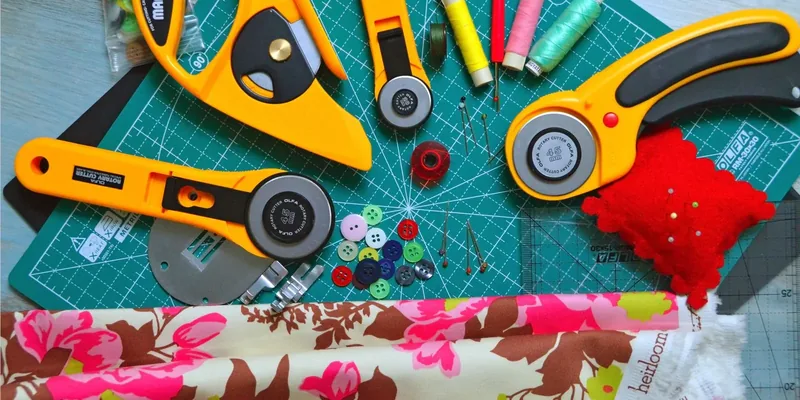
The mat is the piece of equipment people buy last and regret first. Almost everyone starts with the small one, because it is the cheap one and it looks like enough, and then discovers that a fat quarter does not fit on it, a folded width of fabric certainly does not, and every cut turns into two cuts with a shuffle in between.
Rulers have the same trap in reverse. The long ruler that looks unwieldy in the shop is the one that makes straight cuts possible, and the little square that looks like an afterthought is what squares up a block. Neither tool is exciting, and together they decide whether your pieces match.
This article contains affiliate links. If you buy through them, we may earn a commission at no extra cost to you. Learn more.
Quick Answer
What size cutting mat and ruler should you buy?
- Buy the biggest mat your table takes. An 18 by 24 inch mat is the workable minimum for garment and quilt cutting.
- A 24 by 36 inch mat suits a dedicated table and lets you cut a folded width of fabric without moving it.
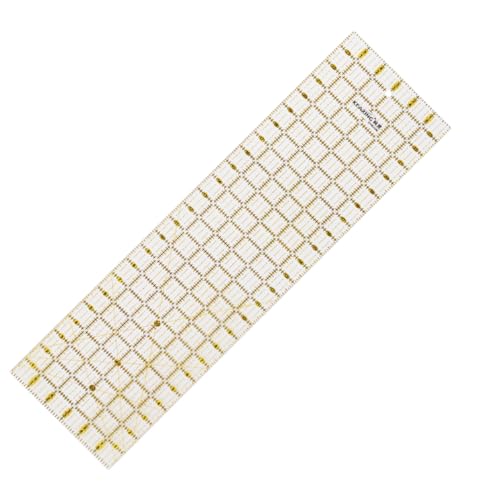
- A 6 by 24 inch ruler is the first ruler. A 12 and a half inch square is the second, for squaring up blocks.
- Self healing mats go under the rotary cutter only, and get stored flat and away from heat.
Bottom line: measure your table first, then buy the largest mat that fits it, and pair it with a long ruler rather than a short one.
Why the Mat Size Decides the Workflow
Quilting cotton usually comes off the bolt around 42 to 44 inches wide, and the standard way to cut strips is to fold it selvedge to selvedge, so the piece on your mat is roughly 21 or 22 inches deep. A mat shorter than that in one direction means folding again, and every extra fold is another chance for the strip to come out bent.
That single number is why the 18 by 24 inch mat is the usual starting point and the 24 by 36 inch is the one people move to. It is not about ambition, it is about how wide the fabric is before you touch it.
Measure the Table, Not the Fabric
Before you order, measure the actual clear surface you cut on. A large mat overhanging the edge of a dining table is worse than a smaller mat that sits flat, because unsupported mat flexes under the ruler and the cut wanders. Mats also warp if they are stored leaning against a wall, and an overhanging one is a mat that gets moved and leaned constantly.
What Self Healing Actually Means
A self healing mat is built in layers of a soft composite that the blade parts rather than slices. The material closes back over the cut, which is why the surface stays smooth and why the blade stays sharp longer than it would on glass, wood or a hard plastic board.
It heals cuts, not gouges. Pressing hard, using a craft knife with a pointed blade, or dragging a dull rotary wheel all leave marks that stay. So does heat: a mat left in a hot car or ironed on will curl permanently, and there is no fixing it afterward.
Grid Lines, Angles and the Printed Side
Most mats are printed with a one inch grid plus 45 and 60 degree angle lines. Use them for rough placement and reference, but square up against your ruler rather than against the mat grid, because the printed grid is a guide and the ruler is the measuring tool. Double sided mats give you a second surface once one side is well worn.
Rulers: the Straight Edge Doing the Real Work
A quilting ruler is thick clear acrylic with printed measurement lines, and it does two jobs at once: it tells you where to cut and it stops the blade wandering. Thickness matters, because a thin ruler lets the blade ride up over the edge, which is how both crooked cuts and cut fingers happen.
The first ruler to own is a 6 by 24 inch. It spans a folded width of fabric, it handles strip cutting, and it doubles as a straight edge for trimming garment pieces. Everything after that is a convenience: a 12 and a half inch square for squaring up blocks, a 6 inch square for small trimming, and a long 3 by 18 for narrow strips.
Non Slip Backing and How You Hold It
The ruler slipping mid cut is the most common cause of a ruined piece. Some rulers come with a gripped underside; for the rest, small adhesive grip dots on the back solve it. Spread your hand across the ruler rather than pressing at one end, keep your fingers back from the cutting edge, and walk your hand along on long cuts instead of stretching.
The other habit worth learning is to cut with the bulk of the ruler under your hand and the offcut on the far side. If the ruler is balanced on the narrow side, the pressure is uneven and it pivots.
Mats and Rulers by Situation
The First Mat for a Shared Dining Table
An 18 by 24 inch self healing mat is the size that fits most dining tables with room for a cup of coffee and still takes a folded width of quilting cotton across its length. It is also light enough to lift away and store flat under a bed or behind a wardrobe.

For a Dedicated Sewing Table
If the surface stays set up, go to 24 by 36 inches. That is the size where a folded width of fabric sits fully on the mat and you can trim a long edge in one pass, which is the difference that shows up in how straight your strips are.

The One Ruler to Start With
A 6 by 24 inch acrylic quilting ruler with clear markings and a non slip underside. This is the workhorse: strips, straightening an edge, trimming garment pieces and squaring the end of a folded width all happen against this one.
For Squaring Up Blocks
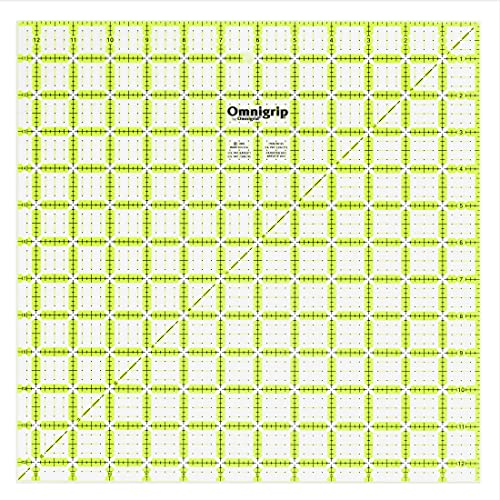
A 12 and a half inch square ruler is the standard block trimming size, because the extra half inch covers the seam allowance on a finished twelve inch block. If you quilt at all, this is the second ruler and it gets used constantly.
For Classes and Small Spaces
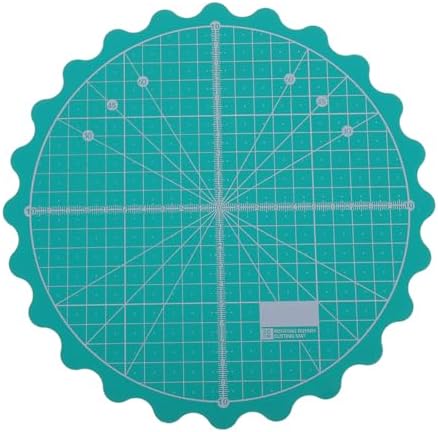
A folding or rotating mat is the answer where storage or table space is genuinely tight. A rotating mat lets you turn the work instead of walking around it, which is exactly what you want when trimming blocks at a crowded class table.
Choosing a Mat Size
The sizes below are the common commercial sizes, and the guidance follows how wide quilting cotton runs when folded selvedge to selvedge. Match the mat to your clear table surface first and to your projects second.
| Mat size | Fits on | Handles | Watch out for |
|---|---|---|---|
| 12 by 18 inch | A lap desk or a corner | Small pieces, trimming, travel | Too small for folded yardage |
| 18 by 24 inch | Most dining tables | Folded width of fabric across | Long cuts need repositioning |
| 24 by 36 inch | A dedicated sewing table | Long strips in one pass | Needs flat storage, warps easily |
| Rotating mat | Sits on top of a bigger mat | Squaring up blocks | Not a main cutting surface |
If your table is the limiting factor rather than the mat, our guide to the sewing machine table covers heights and surfaces, and sewing in small spaces deals with setups that fold away between sessions.
Looking After Both
Store mats flat. Flat on a table, flat under a bed, flat on top of a wardrobe, but flat. A mat stored on its edge or leaning against a radiator will bow, and a bowed mat rocks under the ruler and takes the accuracy with it.
Keep both out of direct sun and away from heat, keep the mat free of thread and lint by wiping it with a damp cloth rather than anything solvent based, and check your ruler for chips along the cutting edge. A chipped ruler edge steers the blade into the nick every time you pass it.
When the Cut Still Wanders
If cuts drift even with a good mat and ruler, look at the blade before you look at your technique. A dull rotary blade skips and pushes sideways, and that reads exactly like a slipping ruler. Our guide to fabric scissors and rotary cutters covers blade sizes and when to change them.
Frequently Asked Questions
What size cutting mat is best for beginners? An 18 by 24 inch mat. It fits most dining tables, it takes a folded width of quilting cotton, and it is light enough to store away between sessions.
Can I iron on a self healing mat? No. Heat warps the surface permanently and there is no way back. Keep the mat away from irons, radiators, hot cars and direct sun.
How do I flatten a warped cutting mat? Sometimes you can improve a mild bow by laying it flat under even weight at room temperature for a few days. A badly warped mat is usually finished, which is why flat storage matters more than the repair.
Do I need a special ruler, or will a metal one do? A thick clear acrylic quilting ruler is the right tool. You need to see the fabric through it to line up the grain and the previous cut, and the thickness is what stops the blade climbing over the edge.
What is the difference between a quilting ruler and a regular ruler? Thickness, transparency and the printed grid with angle lines. A quilting ruler is designed to be cut against; a school ruler is designed to draw against, and a rotary blade will shave the edge off it.
Which ruler should I buy after the 6 by 24? A 12 and a half inch square, for squaring up blocks and trimming. That pair covers most of what a quilter or a garment sewist needs before any specialty shapes.
The Bottom Line
Measure the clear space on your table, buy the largest self healing mat that sits flat on it, and pair it with a 6 by 24 inch acrylic ruler before you buy anything shaped or specialized. Store the mat flat, keep it away from heat, and change the rotary blade when it starts skipping rather than blaming your hand. Read next: fabric scissors and rotary cutters for the blade sizes, quilting notions for a first quilt for the rest of the shopping list, and the sewing machine table if the surface itself is the problem.