Last updated: August 21, 2026
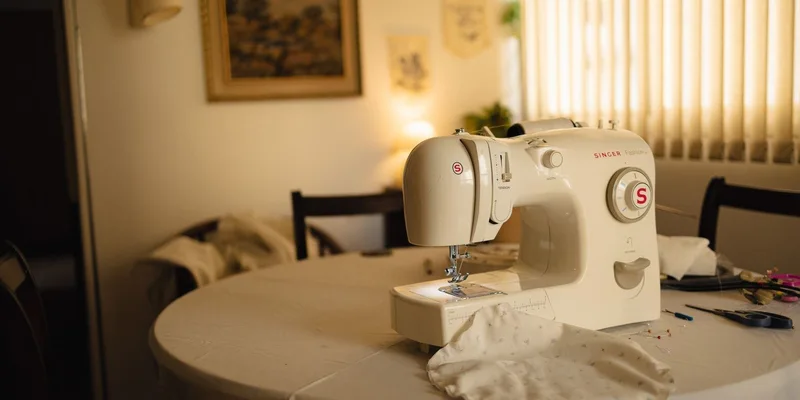
Most people sew on the dining table until something makes them stop. Usually it is the quilt that slides off the edge and drags the seam crooked, or the fact that everything has to be cleared away before dinner, or the way the whole surface hums and walks when the machine gets up to speed on a long straight seam.
A sewing table solves exactly three problems: it sits still, it puts the bed of the machine level with the surface so fabric does not fall away, and it stays set up. Everything else on the spec sheet is storage. This guide covers what a flush platform actually does, how to judge stability before you buy, and how to size a table for the room you have.
This article contains affiliate links. If you buy through them, we may earn a commission at no extra cost to you. Learn more.
Quick Answer
What should you look for in a sewing machine table?
- A drop down platform, so the bed of the machine sits level with the tabletop instead of standing on it. Sew Ready describes its platforms as letting you align the machine base height to the tabletop height.
- Rigidity. A table that flexes under a fast seam transmits the vibration straight into the stitch line.
- A top big enough to support the work to the left and behind the needle, which is where quilts fall off.
- A way to get the room back: folding, wheels, or a platform that raises flush for other uses.
Bottom line: flush platform and a rigid frame first, storage second. Storage is easy to add later and rigidity is not.
What a Flush Platform Actually Does
Sitting a machine on top of a table means the bed of the machine is an inch or so above the surface, so everything you sew has to be lifted over that step. On a small piece it is nothing. On a quilt, a curtain or a coat, the weight of the fabric hanging off that step pulls the seam sideways all the way along.
A drop down platform lowers the machine into a well so its bed becomes part of the tabletop. Sew Ready describes exactly this, saying its drop down platforms let you align the sewing machine base height to the tabletop height, and Arrow says the Gidget platform can also be set flush with the table so the whole surface works as an ordinary table when you are not sewing.
How Flush Is Flush
There is a difference between the machine being level and the surface being continuous. A lowered platform still leaves a gap around the machine, and fabric can catch in it. Arrow states that the Gidget II has a two position manual lift and that it is compatible with custom acrylic inserts to create a totally flush sewing surface, which is the piece that closes the gap. Inserts are usually cut per machine model.
Rigidity Is the Thing Nobody Photographs
Listings show storage and finishes. What decides whether you enjoy the table is whether it stays still. A machine running at speed puts a rhythmic load into whatever it sits on, and a light frame with long unbraced legs turns that into a wobble that shows up as an uneven seam.
Judge it by the frame rather than the top. Steel legs with a cross brace, a full width rear stretcher and legs that are joined rather than free standing all resist twist. Adjustable feet matter more than they sound, because a table with one leg off the floor on an uneven surface will rock no matter how well it is built.
The Quiet Test Before You Buy
If you can see one assembled, put both hands on the corner and push diagonally. Any table racks a little. What you are feeling for is whether it springs back or keeps moving. Buyers report vibration as the most common complaint about lighter folding tables, and it is the one thing you cannot fix with an accessory afterwards.

Sizing the Top for What You Sew
The useful measurement is not the total area but how much surface sits to the left of the needle and behind it, because that is where the weight of the work rests. Garment sewing needs less than quilting, and quilting needs more than almost anyone expects.
As a rough guide, a top around four feet wide handles clothing, curtains and bags comfortably. The Sew Ready folding multipurpose table listing gives a top of 47.5 inches wide by 28 inches deep, with a platform shelf of 22 inches by 10.5 inches that lowers to six positions, which is the shape most home sewing rooms end up with. Quilters generally want more surface still, or a second table set alongside at the same height.

Height Matters More Than Area
A standard desk is often slightly too high for comfortable sewing, because your hands need to be at the fabric rather than at the tabletop. An adjustable height frame, or a table designed for sewing rather than for computers, lets you set it where your forearms sit level. A table at the right height is simply more pleasant to work at for a long session, and that is the whole claim worth making about it.
Tables for a Room You Also Live In
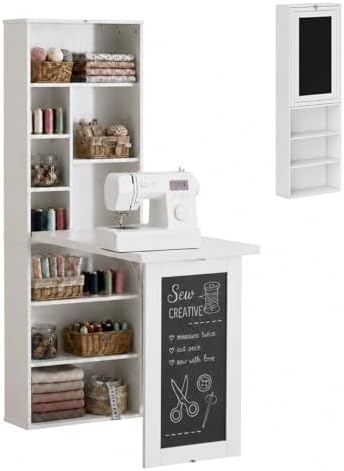
Not everyone has a sewing room. If the table has to share a space, the design question changes from how big to how quickly it disappears, and there are three answers that work: folding legs, wheels, or a platform that raises flush so the table has a second life as a desk.
Arrow makes the second life explicit for the Gidget, noting that with the platform flush against the table you can use it as a normal table for any other purpose, and the Gidget II adds wheels. A folding model is the simplest option if the table lives in a cupboard between projects, and our guide to sewing in small spaces covers the machines that suit the same constraint.
The Main Options Compared
The four categories below cover almost everything sold as a sewing table. The differences that matter are whether the machine drops in, how rigid the frame is, and whether the table can leave the room.
| Type | Machine sits | Footprint | Best suited to |
|---|---|---|---|
| Folding table with drop down platform | Level with the top | Folds away | Shared rooms and occasional sewing |
| Fixed sewing desk with platform | Level with the top | Stays put | A dedicated corner, most stability |
| Portable table with lift and wheels | Level, and raises flush | Rolls away | Classes, guild nights, small homes |
| Plain craft table, no platform | On top of the surface | Varies | Cutting and pressing more than sewing |
If a full table is more than you need, the cheaper route is a clip on extension that widens the bed of the machine itself. Our guide to the sewing machine extension table covers what that does and does not solve, and it is the sensible first purchase for most people.

Setting the Table Up Well
Put the machine so the needle sits roughly at your center line rather than off to one side, and leave room for the foot pedal to sit flat where your foot naturally rests. A pedal that slides on a hard floor is a small irritation that becomes a big one, and a strip of rug gripper under it solves it.
Light matters as much as surface. The overhead light in most rooms comes from behind, so the presser foot sits in your own shadow at exactly the moment you need to see it. A small lamp clamped to the table or the machine removes the problem entirely, and our guide to sewing machine lighting covers the options.
Frequently Asked Questions
Do I need a sewing table or will a desk do? A desk works until the size of the work outgrows it. The two things a desk usually lacks are a drop down platform to bring the machine bed level with the surface, and enough rigidity to stay still at speed. If you mostly sew small items, a solid desk is fine.
What is a drop down platform? A section of the tabletop that lowers so the machine sits in a well rather than on the surface. Sew Ready describes its platforms as aligning the machine base height to the tabletop height. It is the single feature that makes a big quilt manageable.
What is an acrylic insert for? It fills the gap left around the machine when the platform is lowered, so the surface is continuous. Arrow says the Gidget II is compatible with custom acrylic sewing inserts to create a totally flush sewing surface. Inserts are usually cut for a specific machine model.
How big should a sewing table be? Big enough to support the work to the left of and behind the needle. Around four feet wide suits garments, curtains and bags. The Sew Ready folding multipurpose table listing gives 47.5 inches by 28 inches, and quilters generally want more than that.
Can I build my own sewing table? Plenty of people do, usually by cutting a well into a flat pack desk to drop the machine in. It is a woodworking project rather than a sewing one, and the two things to get right are a rigid frame and a well cut precisely to the machine base. We do not publish plans.
Will a sewing table help with a big quilt? It helps a great deal, because the weight of a quilt hanging off the edge is what drags the seam. A flush platform and a large flat surface let the quilt sit level. Our guide to machines for quilting covers the throat space side of the same problem.
The Bottom Line
Buy for the platform and the frame. A drop down platform that brings the machine bed level with the top removes the drag that ruins long seams, and a rigid braced frame keeps the vibration out of the stitch line. Size the top by how much surface sits left of and behind the needle, set the height so your forearms are level, and add a lamp. If the budget or the room says no, a clip on extension solves part of it for a fraction of the space. Read next: our guide to the extension table and to sewing in small spaces.