Last updated: August 22, 2026
A sewing machine is one of the better gifts you can give and one of the easier ones to get wrong, because the person opening it has an idea in their head that you cannot see. They may be picturing hemming their own trousers. They may be picturing quilts. They may have said the word sewing once in October and now there is a box under the tree.
The good news is that the checks are quick. Four questions about the recipient, one about where the machine will live, and one honest question about whether they asked for this at all. Get those right and a first machine turns into years of use. Get them wrong and it becomes the thing in the closet that nobody wants to admit to.
This article contains affiliate links. If you buy through them, we may earn a commission at no extra cost to you. Learn more.
Quick Answer
What should you check before giving a sewing machine?
- What they want to make. Mending, garments and quilting point at three different machines.
- Whether they already own one, and whether the gift is meant to replace it or sit beside it.
- Where it will live, because a machine that has to be lifted in and out of a cupboard needs a handle and low weight.
- Whether the retailer’s return window survives the gap between buying and giving.
Bottom line: a straightforward machine with speed control and a visible bobbin suits almost every recipient. Add supplies rather than upgrading the model.
Start With What They Want to Make
Everything follows from this. Someone who wants to hem trousers and fix seams needs a plain, steady machine and nothing else. Someone who wants to make clothes needs buttonholes and a stretch stitch. Someone who has been talking about quilting needs table space and the ability to fit a walking foot.
If you cannot ask directly without ruining the surprise, listen for the project. People describe the thing they want to make long before they describe a machine. A curtain that is too long, a school costume, a bag they saw, a quilt for a new grandchild. That sentence is your specification.
The Safe Choice for an Unknown Recipient
A mid weight beginner machine with a drop in bobbin, an automatic needle threader and a clearly printed threading path. It handles mending, garments and small quilts, it is easy to get parts for, and nothing about it will feel like a toy to someone who turns out to be serious about this.
Add a speed slider if you can, because it is the feature that makes the first evening calm and it is the one that turns the machine into something a teenager can share. The full reasoning is in what actually matters in a beginner machine, and the models are lined up in the picks page.
For a Recipient Who Mostly Wants to Mend
Straight stitch, zigzag, a free arm to slide a trouser leg over, and no menus. A short stitch list is not a downgrade for this person; it is one less thing to read. Singer lists the Start 1304 with six built in stitches at preset width and length and a removable free arm, which is exactly this shape of machine.
For a Recipient Who Wants to Make Clothes
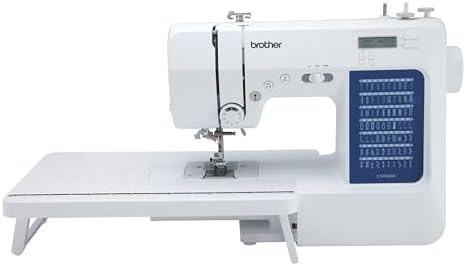
A machine with a one step buttonhole, a stretch stitch and enough weight to stay planted. Brother lists the CS7000X with 70 built in stitches, an LCD display, adjustable sewing speed control, ten presser feet and a detachable wide table, which covers garments comfortably and leaves room for quilting later.
For a Recipient With Very Little Space
A lightweight portable with a carry handle and accessories in the free arm compartment. Singer lists the M3500 with 32 built in stitches, a one step buttonhole, a built in needle threader and LED lighting in a body designed to be moved. The honest trade is stability on thick seams.

The Gift That Improves Any Machine
If they already own a machine, or if you would rather not guess, supplies are a genuinely welcome gift and almost impossible to get wrong. A good set of needles, a dozen bobbins in the right class, decent thread and a pair of fabric shears will be used within a week.

Matching the Machine to the Recipient
The table maps the four common recipients to the machine shape that suits them and the mistake most often made for each. Use it as a sanity check on a choice you have already narrowed down.
| Recipient | What suits them | Feature to insist on | Common mistake |
|---|---|---|---|
| Mends and hems only | Basic mechanical | Free arm | Buying a handheld gadget |
| Wants to make clothes | Entry computerized | One step buttonhole | Too few stitches |
| Small apartment | Lightweight portable | Carry handle | Ignoring stability |
| Teenager or child | Full size with slider | Speed limiter | Buying a toy machine |
The bottom row is the one worth arguing about with yourself. Toy sized machines look like the right gift for a child and usually are not, because they jam more and thread less easily. The reasoning, including the safety side, is in the kids machine guide.
The Practical Checks Before You Order
Three things people forget. Check the return window against the date you plan to give it, because machines bought in October and opened in December can fall outside it. Check whether the recipient already owns a machine. And check the box will fit wherever you plan to hide it.
One more that saves an awkward moment: registration and warranty are usually in the buyer’s name, so keep the receipt and pass it on with the machine. Warranty terms differ by brand and by region, so point the recipient at the manufacturer rather than repeating any general claim about coverage.
How to Give It Well
Include the supplies. A machine on its own means a second shopping trip before anything can be made, while a machine with needles, bobbins, thread and a pair of shears can be used the same afternoon. That is the difference between a gift that gets opened and a gift that gets used.
If you sew yourself, the most valuable addition is an hour of your time to thread it together and sew one straight seam. Our first seam walkthrough is written for exactly that afternoon, and the starter supplies list tells you what to put in the bag alongside the box.
Frequently Asked Questions
Is a sewing machine a good gift? It is, for someone who has described something they want to make. It is a poor gift for someone who has only shown polite interest, because it takes up space and carries an obligation. When in doubt, give supplies and a promise to help choose the machine together.
Which sewing machine should I give a complete beginner? A mid weight machine with a drop in bobbin, an automatic needle threader and a printed threading path, ideally with speed control. That description covers mending, garments and small quilts. See the picks by situation for models.
Should I give a child a toy sewing machine? Usually not. Toy sized machines are lighter, harder to thread and more prone to jamming, and a jam is what ends the interest. A full size machine with a speed limiter is often the better and safer gift, as explained in the kids guide.
What if they already have a sewing machine? Then supplies, a walking foot, an extension table or a good light are all better received than a second machine. Check the shank type and bobbin class first so the accessory fits, as covered in the starter supplies guide.
Is a used machine an acceptable gift? A serviced machine from a dealer, absolutely, and often better built than a new one at the same money. An unserviced private sale is risky as a gift because the recipient inherits any timing or tension problems. See the used machine checklist.
The Bottom Line
Work backward from the thing they want to make, then pick a straightforward machine with a visible bobbin, an easy threading path and speed control if you can get it. Add needles, bobbins, thread and shears so it can be used the same day, keep the receipt, and check the return window covers the gap between buying and giving. If you are unsure they want a machine at all, give the supplies and choose the machine together later. Read next: beginner picks by situation and what to buy alongside the machine.