Last updated: August 22, 2026
Sewing clips arrived with a lot of noise and a lot of people quietly kept using pins. Both camps are right about their own sewing. A clip is better than a pin at four specific things, a pin is better than a clip at several others, and the interesting part is the boundary between them.
The useful way to decide is not brand loyalty but a question about the material: does a pinhole close again? On woven cotton it does, and the pin keeps all its advantages. On vinyl, coated cotton and leather it does not, and every pin you place is a permanent mark in the finished item. That single test decides most cases.
This article contains affiliate links. If you buy through them, we may earn a commission at no extra cost to you. Learn more.
Quick Answer
Should you use sewing clips or pins?
- Clips win where a pinhole is permanent: vinyl, faux leather, laminated cotton and leather. Clover names vinyls, piles and heavyweight fabrics as where clips are the alternative to pins.
- Clips also win on thick stacks such as quilt binding and bag layers, where a pin cannot get through cleanly.
- Pins win on fine and slippery fabrics, on precise seam matching, and anywhere the layers need to be held flat rather than at the edge.
- Both are cheap enough to own together, and most sewing rooms end up with both.
Bottom line: ask whether the hole closes. If it does not, clip it.
What Each One Actually Does
A pin passes through the layers and holds them in register with each other, anywhere on the fabric. A clip grips the layers from the edge and holds them together at that edge only. That difference in geometry explains every advantage and every limitation of both, and it is worth stating plainly before the comparisons.
Because a clip works from the edge, it never puts a hole anywhere and it never fights thickness. Because a pin works through the fabric, it can hold two points that need to line up exactly, and it can hold the middle of a piece rather than just the border. Neither of those abilities transfers.
What a Clip Is Built Like
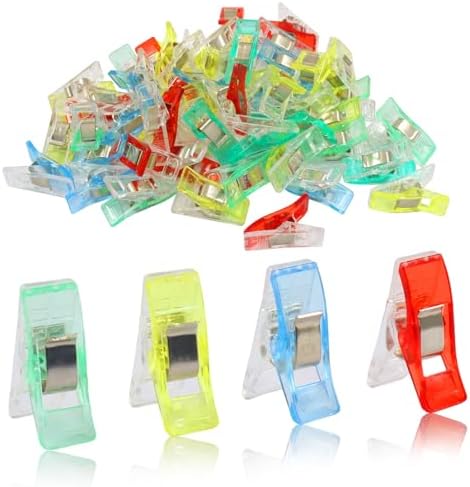
Clover, the maker most people mean when they say sewing clips, describes the design points: the clip opens wide to hold layers, the base is flat so it feeds easily toward the presser foot, and the flat side carries seam allowance markings at one quarter inch and one half inch. Clover lists its standard clips at 1.375 inches and sells them in packs of ten, fifty and one hundred, with a jumbo version for thicker work.
Four Fabrics Where Pins Lose
These are the materials where the argument stops being about preference. In each case a pin leaves damage that stays in the finished piece, or simply cannot do the job, and a clip does the same work with no downside worth mentioning.
Vinyl and Faux Leather
Every pinhole in vinyl is permanent and visible, and along a seam allowance it perforates the material like a stamp edge. Clover names vinyls specifically as a case for clips. Clips hold the edge, come off as the foot reaches them, and leave the surface untouched. Our guide to sewing vinyl covers the needle and the foot that go with it.
Laminated Cotton and Oilcloth
Same problem, plus a second one: the coating grips a pin so tightly that pulling it out distorts the layers you just aligned. Clips slide off cleanly. These are also the fabrics where a microtex or non stick needle matters, since the coating is what causes thread to heat and break.
Thick Quilt Binding and Bag Layers
A binding folded over a quilt sandwich is more thickness than a pin manages gracefully, and a pin driven through at an angle pulls the binding out of line. Clips hold the fold exactly where you set it and let you work all the way round without stabbing yourself. For thick stacks, the jumbo size is the one that fits.

Leather
Holes in leather are forever, including the ones outside the seam line. Clips, or double sided basting tape in the seam allowance, are the standard answers. This is also the point where honesty is worth more than enthusiasm: thick leather is beyond most home machines regardless of how you hold it together, as our guide to sewing leather explains.
Where Pins Still Win
Clips cannot hold anything that is not an edge, and that rules them out of a surprising amount of garment sewing. If you need two seams to meet exactly, or a gathered edge eased into a flat one, or a dart folded and held in the middle of a panel, a pin does it and a clip cannot.
Pins also win on fine and slippery fabric. A chiffon or a lightweight lining slides out from under a clip, whereas a fine pin holds it in register without adding bulk. And pins hold a paper pattern to fabric, which is the job clips were never designed for. Fine glass head pins are the ones worth having, since a thick pin distorts a fine weave and a plastic head melts under an iron.
The Safety Difference
Clips do not stab you and do not disappear into a carpet or a pet’s paw, which is a genuine reason to prefer them in a house with children. Pins that do go missing are worth finding with a magnet rather than a bare hand.
Side by Side
The table compares the two on the things that actually differ. The seam allowance markings and the flat base are Clover’s stated design features, and the rest follows from the geometry of edge holding against through holding.
| Job | Clips | Pins | Better choice |
|---|---|---|---|
| Vinyl, laminate, leather | No holes at all | Permanent perforation | Clips |
| Thick binding and bag layers | Grip the fold as set | Struggle through the stack | Clips, jumbo size |
| Matching two seams exactly | Cannot register two points | Holds both layers in line | Pins |
| Fine or slippery fabric | Fabric slides out | Fine pin holds without bulk | Pins |
| Holding a pattern to fabric | Only at the edge | Anywhere on the piece | Pins |
| Long straight edges and hems | Fast, flat base feeds well | Works, needs removing earlier | Either |
If you are assembling a first kit, both belong on the list. Our guide to what to buy with a first machine puts them in order of usefulness, and quilting notions for a first quilt covers the binding stage where clips earn their place.
Using Either One Without Trouble
Place them at right angles to the seam if you are pinning, heads toward the edge, so they come out easily as the foot approaches. Remove every pin and every clip before the presser foot reaches it. Sewing over a pin snaps needles and nicks the plate, and sewing over a clip is worse because it is solid plastic in the path of the needle.
Space them for the job rather than by habit. A straight edge in stable cotton needs very few, a curve or a stretchy edge needs many. If your needle keeps snapping regardless, our guide to needles that keep breaking covers the other causes.
Frequently Asked Questions
Are sewing clips better than pins? Only for certain jobs. Clover names vinyls, piles and heavyweight fabrics as where clips are the alternative to pins. For matching seams, easing curves and holding fine fabric or a paper pattern, pins remain better because they hold through the layers rather than at the edge.
Can you sew over sewing clips? No. Remove each one before the presser foot reaches it. A clip is solid plastic and will break a needle and can damage the foot. Clover’s flat base makes clips easy to slide off as you approach them, which is part of the design.
What are the markings on the back of a sewing clip? Seam allowance guides. Clover marks its clips at one quarter inch and one half inch, so you can line the clip up against the raw edge and see roughly where the stitching line will fall without reaching for a ruler.
How many clips do I need? Clover sells packs of ten, fifty and one hundred. A pack of ten suits occasional hems, fifty covers a garment or a small bag, and a quilt binding is the job that makes people buy the hundred.
Do clips work on quilt binding? That is where most quilters convert. The clip holds the folded binding exactly where you set it around the whole edge. For thicker sandwiches the jumbo size opens wider, which is the reason it exists.
Are glass head pins worth it over plastic heads? If you press with pins in place, yes, because plastic heads melt against an iron. Glass heads survive it. Fine pins also matter more than head material on lightweight fabric, where a thick pin distorts the weave.
The Bottom Line
Ask whether the hole closes. On vinyl, laminate, leather and thick binding it does not, and clips are the right answer. On cotton, on fine fabric, and any time two points have to line up exactly, pins do a job clips cannot. Own both, keep the clips near the binding and the fine pins near the garment sewing, and take either one out before the presser foot arrives. Read next: what to buy with your first sewing machine and our first quilt notions guide.