Last updated: August 21, 2026
Strong and Tough is a good name for a product and a bad name for a category. It sets an expectation that this machine belongs in a different league from the rest of the Brother shelf, and then the box turns out to weigh about the same as the machine next to it. That gap between the badge and the body is what this review is about.
There is something real underneath the marketing. Brother did put different parts in this machine, and they are the parts that matter for thicker fabric. What it will not do is make a light domestic machine behave like a shop machine, and buying it with that expectation is how people end up writing angry reviews about a perfectly decent product.
This article contains affiliate links. If you buy through them, we may earn a commission at no extra cost to you. Learn more.
Quick Answer
Is the Brother ST371HD really a heavy duty machine?
- Heavy duty is a marketing term with no standard behind it, so judge the parts rather than the badge.
- What Brother actually lists here: a metal needle plate, a reinforced metal frame, heavyweight needles in the box and 37 built in stitches.
- What it is not: a heavier machine. The body is light and portable, with a built in handle.
- Good for denim hems, canvas totes, outdoor fabric and repairs. Not for upholstery leather or long runs of stacked webbing.
Bottom line: a genuinely better machine for medium and thick woven fabric, still a domestic machine with domestic limits.
What Heavy Duty Means on This Machine
Nothing in the industry defines heavy duty, so every brand uses it differently. On the ST371HD, Brother’s own listing points at specific parts: a metal needle plate described as giving smoother fabric feeding, heavyweight needles included for heavier layers, and a reinforced metal frame. Those are real components, not adjectives.
What is absent from the description is the thing people imagine. There is no claim of industrial capacity, and the machine is deliberately built light and portable with a carrying handle. If you want the broader argument about the label across brands, it is in what the heavy duty label means.
The Parts That Actually Help
A metal needle plate matters because a stamped metal surface stays flat and lets fabric slide predictably, and because the needle hole holds its shape. A reinforced frame matters because it reduces flex, and flex is what makes cheap machines feel vague at a thick seam. Both are quiet upgrades you notice in the feel rather than on paper.
The Needles in the Box Are Not a Detail
Brother including heavyweight needles is more useful than it sounds, because the single most common reason a machine fails on thick fabric is the wrong needle. A universal 80/12 will not go through what a 100/16 denim needle handles, and no amount of machine will fix that.
It also sets the habit early: change the needle for the fabric, not once a year. That principle runs through everything in the needle guide and is the first check in almost every problem article on this site.

What It Sews Well
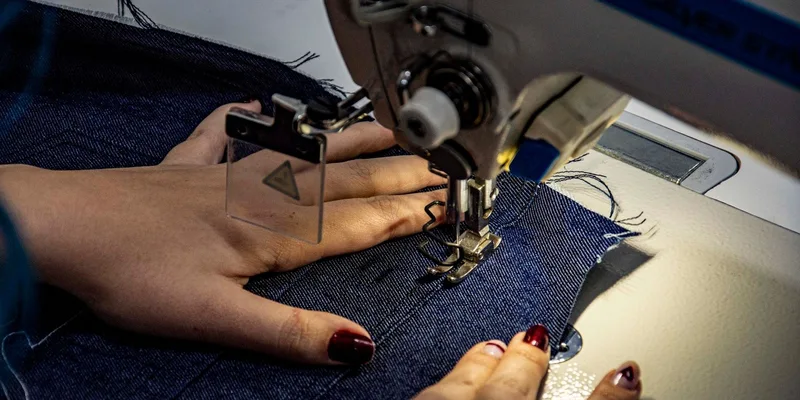
Denim hems, duck canvas, outdoor and utility fabric, heavier home decor cloth, tote bags, repairs to work clothes and gear. Anything in the medium to heavy woven range where the fabric is thick but the stack is not extreme. That covers most of what people mean when they say they need something stronger.
It also does ordinary sewing perfectly well, with 37 stitches, a one step buttonhole and six feet including a nonstick foot for materials that drag. Brother lists drop feed too, so free motion work is possible even though this is not primarily a quilting machine. For fabric specific setup, see the denim guide.
Where It Stops
At the point where the stack gets tall or the material gets dense. Upholstery leather, saddle leather, thick webbing straps sewn in layers, boat canvas seams doubled and folded: these need feed and pressure that a light domestic machine does not have, whatever the badge says.
The Honest Test Before You Buy
Take the thickest thing you actually plan to sew, fold it the way it will be folded in the finished item, and squeeze it between two fingers. If it barely compresses and it is more than a few millimeters, no machine on the retail shelf is the right answer, and the money belongs in accessories and technique instead.
That is the whole approach in what your machine needs for thick fabric, and it is why a walking foot often does more for a difficult project than a different machine would.

Thread Matters as Much as the Machine
People buying a machine for heavy work usually keep using the same all purpose thread and then wonder why seams on a bag give out. Heavier fabric wants heavier thread, and topstitching on denim wants a thread that shows. This is the cheapest upgrade in the whole category.
Match the needle to the thread as well as to the fabric, because a thick thread needs a needle with an eye and groove big enough to carry it without fraying. The pairings are set out in the heavy duty thread guide.

ST371HD Against the Alternatives
The realistic shortlist for someone shopping this shelf, compared on the parts that differ.
| Model | Body | Selection | Choose it if |
|---|---|---|---|
| Brother ST371HD | Light, portable, built in handle | Dial, 37 stitches | You move the machine and sew medium to heavy wovens |
| Singer Heavy Duty 4423 | Heavier, more mass on the table | Dial, adjustable length and width | You want the machine to sit still at a thick seam |
| Janome HD3000 | Die cast aluminum, heaviest of the three | Dial, short stitch list | Build feel matters more than stitch count |
| Brother CS7000X | Light, wide table included | Screen, speed slider | Quilting and controlled slow sewing, not heavy work |
Frequently Asked Questions
Can the Brother ST371HD sew through denim? Yes for hems and normal denim projects, with a denim needle and a slow, steady speed. The place any light machine struggles is where seams stack up and the fabric will not compress. Turn the handwheel by hand over those bumps rather than forcing the pedal.
Is the ST371HD better than a Singer Heavy Duty? Different trades. The Brother is lighter and easier to carry, the Singer has more mass, which helps it stay planted at a thick seam. Both are domestic machines. The Singer side of the argument is in the 4423 review.
Can it handle leather? Thin garment leather or faux leather in one or two layers with a leather needle and a nonstick foot, at a slow speed. Thicker leather goods need a different class of machine entirely, as explained in where home machines stop.
Is the ST371HD good for beginners? It is easy to use, but it is the right first machine only if thick fabric is genuinely your plan. A beginner sewing cotton and making clothes gets more from a standard mechanical or computerized model. Compare in beginner picks for six situations.
Does it have a speed control slider? No. Speed comes from the foot pedal, as on Brother’s other mechanical machines. If you want a speed limiter you need to move to the computerized line, which is covered in computerized or mechanical.
The Bottom Line
The ST371HD is an honest machine with a slightly dishonest category name. The metal needle plate, the reinforced frame and the heavier needles do make it better for denim, canvas and repair work than a standard entry machine, and the light portable body means it never becomes a heavy machine. Buy it for medium and thick wovens, not for leather goods. Read next: what the heavy duty label means, and the Brother lineup explained.