Last updated: August 21, 2026
Free motion quilting looks like a skill problem and is mostly a setup problem. Almost every complaint that sends someone searching, thread breaking, a nest of loops on the back, stitches that go from tiny to enormous within an inch, comes from something you can fix before the needle goes down. Get the setup right and the practice is genuinely enjoyable. Get it wrong and no amount of practice helps.
The idea itself is simple. You drop the feed dogs so the machine stops moving the fabric, fit a foot that hops instead of pressing, and move the quilt with your hands. The machine controls the needle, you control the stitch length. Everything below is about making that arrangement behave.
This article contains affiliate links. If you buy through them, we may earn a commission at no extra cost to you. Learn more.
Quick Answer
How do you set up a machine for free motion quilting?
- Drop the feed dogs, or fit the cover plate if your machine supplies one instead of a lever.
- Fit a free motion or darning foot, and set stitch length to zero since the machine no longer controls it.
- Fit a fresh needle in a size that suits your thread, and rethread the machine with the presser foot lifted.
- Support the quilt so its weight is not pulling, then run a test sandwich before touching the real quilt.
Bottom line: test on a scrap sandwich made from the same materials, and only adjust tension after the threading and the needle are known good.
Set the Machine Up in This Order
Order matters, because the later steps depend on the earlier ones being right. Feed dogs down, correct foot on, stitch length to zero, new needle, fresh threading with the presser foot up, then bobbin checked and seated properly. Only after all of that do you touch a tension dial.
The presser foot up during threading is not a superstition. The tension discs open when the foot is raised and clamp shut when it is lowered, so threading with the foot down leaves the thread sitting outside the discs with effectively no upper tension at all. That single mistake produces most of the loops people blame on the machine.
Feed Dogs Down, or Covered
Most machines have a lever or a switch, often at the back of the free arm or behind the bobbin door. A few budget machines supply a cover plate that screws or clips over the dogs instead. Both work. What does not work is leaving the dogs up, because they will drag the quilt in one direction while you are trying to move it in another.
Needle and Thread Choices That Prevent Trouble
A fresh needle is the cheapest insurance in quilting. Free motion sends the needle through a sandwich of top, batting and backing thousands of times, sideways as well as straight down, and a dull or slightly bent needle skips stitches and shreds thread. Change it at the start of a quilt, not when it starts misbehaving.
Matching the Needle to the Thread
The needle eye has to let the thread pass without friction. Fine thread through a large needle leaves an oversized hole, and heavy thread through a fine needle frays and snaps. Quilting needles and topstitch needles both have larger eyes than a universal of the same size, which is why they are popular for this job. Our needle guide covers sizes and points in full.
Thread choice is a design decision as much as a technical one, since quilting stitches either sink into the fabric or stand on it. That is the subject of the quilting thread guide, and it is worth reading before you commit a whole quilt to a thread you have not tested.

Support the Quilt Before You Blame the Tension
A quilt hanging off the side of a table pulls on the needle with real force, and it pulls unevenly as you move. The result is stitches that stretch on one side of a motif and bunch on the other, which looks exactly like a tension fault and is not one. Fix the support first.
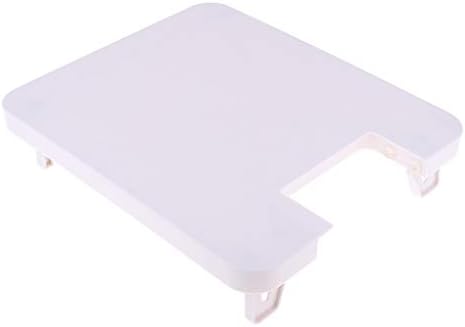
What you want is the quilt at the same level as the machine bed on all sides, so nothing hangs. An acrylic extension table makes the machine bed flat and wide, and pushing the sewing table against a wall or another table catches the overflow. Our extension table guide covers sizing them to a machine.
The Test Sandwich, and What It Tells You
Make a scrap sandwich from the same top fabric, the same batting and the same backing as the quilt, at least the size of a dinner plate. Anything smaller flops around and lies to you. Then stitch loops and a few straight runs on it before the real quilt goes near the machine.
| What you see | Most likely cause | Check first | Only then |
|---|---|---|---|
| Loops on the underside | Top thread not in the tension discs | Rethread with the foot raised | Upper tension setting |
| Stitches wildly uneven | Hand speed against machine speed | Run faster, move slower | Practice, gloves for grip |
| Thread shredding or snapping | Needle too small or dull | New needle, larger eye | Thread quality and spool age |
| Skipped stitches | Needle wrong type or worn | New quilting or topstitch needle | Slow down over thick seams |
Hands, Speed and Posture
Stitch length comes from the ratio between how fast the needle goes up and down and how fast your hands move. Most beginners run the machine too slowly and their hands too quickly, which produces long, loose stitches. Running the motor faster and moving deliberately gives shorter, more even stitches almost immediately.
Small Practical Details That Help
Grip gloves make a real difference, because moving a quilt smoothly with dry fingers is hard work. Chair height matters too: elbows should be at or slightly above the bed of the machine, so you steer with your forearms rather than your wrists. Work in patches the size of your hands and reposition often rather than reaching across the quilt.
Finally, stop before you get tired. Free motion quality falls off sharply once your shoulders tighten, and unpicking quilting through three layers is a job nobody enjoys twice.
Frequently Asked Questions
What stitch length do I set for free motion? Zero, or whatever your machine shows when the feed dogs are down. The setting no longer does anything, because the feed dogs are not moving the fabric. Your hand speed is the stitch length.
Do I need to lower the presser foot if the feed dogs are down? Yes, always. Lowering the foot is what closes the upper tension discs. Quilting with the foot up is the single most common cause of a nest of thread under the fabric.
Should I change the top tension for free motion? Usually a small reduction helps, but only after threading, needle and bobbin are confirmed good. Adjusting tension to fix a threading error just moves the problem somewhere else.
Can I free motion quilt on any machine? On most, yes, provided the feed dogs drop or can be covered and a darning foot fits your shank. What varies is how comfortably the machine runs at low speed and how much room there is for the quilt. See what makes a machine good for quilting.
Which foot should I use to start? An open toe free motion foot, because seeing the line matters more than a fraction of extra stability while you are learning. The options are compared in the quilting feet guide.
The Bottom Line
Free motion quilting rewards a careful setup far more than a better machine. Feed dogs down, the right foot, a fresh needle, threading done with the foot raised, the quilt supported on all sides, and a test sandwich in the same materials as the real thing. Read next: choosing a free motion foot for your shank and the thread that makes quilting stitches show or sink.