Last updated: August 22, 2026
Brother is the machine most American beginners actually end up with. Not because anyone decided it was the best brand, but because the two or three models people search for are sitting on the shelf, they cost what a nervous first time buyer is willing to spend, and they thread themselves. That combination sells an enormous number of machines every fall.
The problem is the catalog. Brother uses letter prefixes and four digit numbers, sells overlapping models through different retailers, and refreshes the lineup often enough that the model you read about two years ago may not be the one on the shelf now. Underneath the alphabet soup there are only about five kinds of Brother machine, and once you can name them the choice is quick.
This article contains affiliate links. If you buy through them, we may earn a commission at no extra cost to you. Learn more.
Quick Answer
Which Brother sewing machine should you buy?
- Mechanical dial machines (XM, GX): the straightforward first machine for hemming, mending and simple garments.
- Computerized machines (CS): a screen, a longer stitch list, speed control and usually a wide table for quilting.
- Strong and Tough (ST): the heavier fabric option, with a metal needle plate and a reinforced frame.
- Dealer machines (Innov-is and the quilting line): sold through shops with setup and service, not off a retail shelf.
Bottom line: mechanical if you want fewer things to learn, computerized if you want speed control and a wide table, Strong and Tough if denim and canvas are already on your list.
The Five Kinds of Brother Machine
Brother splits its home range into mechanical machines, computerized machines, the Strong and Tough heavier fabric models, combination sewing and embroidery units, and the dealer line. Almost every model you will see in a store or a search result belongs to one of those groups, and the group tells you more than the number does.
What the groups share is the part that sells the brand: an automatic needle threader, a drop in bobbin that sits under a clear cover so you can see the thread, and printed threading diagrams on the body. Those three features are why so many first machines are Brothers, and they are worth more on a first evening than any stitch count.
Mechanical: The XM and GX Machines
These are the dial machines. You turn a knob to pick a stitch, the stitch pictures are printed on the front of the machine, and there is no screen or menu. Brother lists 27 built in stitches for the XM2701 and 37 for the GX37, both with a one step buttonhole and six included feet.
Who Should Buy One
Anyone whose sewing list is hems, mending, cushion covers, curtains and the occasional simple garment. A dial machine has fewer steps between sitting down and sewing, and there is nothing to get lost in. It is also the tier where the money goes into the machine rather than into the screen.
The GX37 is the quieter, slightly more capable of the two, and the XM2701 is the one Google’s own results keep pushing at beginners. We take each apart in the XM2701 review and the GX37 review, both built around what a beginner actually needs rather than the spec sheet.

Computerized: The CS Machines
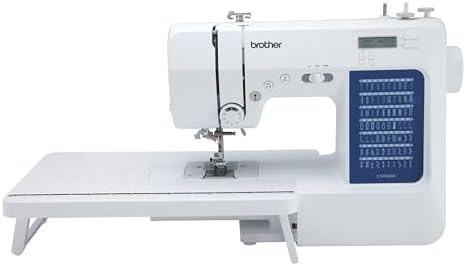
The CS line puts stitch selection on a small screen and adds the controls that mechanical machines leave out: a speed slider, needle up and down, and drop feed for free motion work. Brother lists 70 built in stitches and a detachable wide table for the CS7000X, and 60 stitches for the CS5055.
What the Screen Actually Buys You
Not the stitch count. The useful part is the speed slider, because it lets a nervous sewer run the machine slowly with the pedal fully down, and the wide table, because a quilt needs somewhere to rest. Drop feed matters if you ever want to do free motion quilting on a domestic machine.
If you are choosing between a dial machine and a screen, the honest deciding question is whether you will use speed control and a wide table. That comparison is laid out in computerized or mechanical, and the two most compared Brothers meet head to head in XM2701 against CS7000X.
Strong and Tough: The ST Machines
Strong and Tough is Brother’s answer to the heavy duty shelf. For the ST371HD, Brother lists 37 built in stitches, a metal needle plate for smoother feeding, heavyweight needles in the box and a reinforced metal frame. It is still a domestic machine in a light body, and it should be judged as one.
The realistic use is thick cotton, denim hems, canvas totes, outdoor fabric and repairs that a lighter machine drags on. The limits are the ones every home machine has: long runs through very thick stacked seams are hard on any of them, and the fix is the right needle and a slow, steady feed rather than a stronger push. The ST371HD review covers where the line is, and what the heavy duty label means covers the term itself.

The Combination Machines and the Dealer Line
Brother also sells combination units that sew and stitch out designs, and a separate dealer line sold through sewing shops with setup, lessons and local service included. Both are real products. Neither is the machine most first time buyers should start with, for different reasons.
Why We Keep Those Separate
A combination machine asks you to learn two crafts at once and adds a supply chain of stabilizer, special thread and design files. Our article on what you give up with a combination machine is the honest version of that conversation. The dealer line trades price for service, which is a good deal for some people and an unnecessary one for a sewer who mostly hems.
The Brother Groups Side by Side
The table below is the shortlist most people need. Note the last column, because buying across groups is the mistake that leads to a machine that never quite fits the work.
| Group | Stitch selection | Signature feature | Suits you if |
|---|---|---|---|
| XM and GX mechanical | Dial, printed on the body | Fewest controls to learn | Hemming, mending, simple garments |
| CS computerized | Buttons and small screen | Speed slider and wide table | Garments and quilts, nervous first timers |
| ST Strong and Tough | Dial | Metal needle plate, reinforced frame | Denim, canvas, outdoor fabric, repairs |
| Dealer line | Touch screen | Setup, lessons and local service | You want a shop behind the machine |
What Brother Owners Complain About
The recurring complaint across the retail models is skipped stitches, and it clusters on knit fabric and on thick seams. The second is thread nesting under the fabric on the first evening. Both are usually setup rather than a fault, which is annoying to hear and true anyway.
A fresh needle in the right point shape fixes most of the first problem, and rethreading with the presser foot raised fixes most of the second. If your machine is doing either, work through why a machine skips stitches and the needle guide before you conclude you bought a bad machine.
Frequently Asked Questions
Which Brother sewing machine is best for beginners? A mechanical XM or GX model if you want the simplest possible start, or a CS model if you want the speed slider and a wide table. Both threaded themselves, which is the feature beginners notice first. Details in our beginner guide.
What is the difference between the CS and XM series? CS machines are computerized, with stitch selection on a screen, a speed slider and usually a wide table. XM machines are mechanical, with a stitch dial and no screen. The mechanical machines have fewer parts to fail and fewer settings to misread.
Are Brother sewing machines reliable? The retail models hold up well for the light and medium sewing they are sold for. Most one star reviews describe threading problems, skipped stitches or thick seam trouble rather than a machine that stopped working, and those are usually needle and threading issues.
Can a Brother machine sew denim? Yes for hems and light denim projects, with a denim or jeans needle and a slow steady speed. Heavier stacked seams are where any light domestic machine struggles. If denim is your main work, look at the ST line and our denim setup guide.
What do the Brother model letters mean? Brother does not publish a public decoder, but the prefixes track consistent groups in the catalog: XM and GX for mechanical, CS for computerized, ST for Strong and Tough. We map them in Brother model numbers explained.
The Bottom Line
Pick the Brother group first. Mechanical XM or GX if you want the fewest controls, CS if the speed slider and wide table matter, ST if denim and canvas are already in your pile, dealer line if you want service included. Read next: the XM2701 review for the model most beginners land on, and Brother against Singer if you are still weighing the two shelf brands.